So, I've been slow to get on the Claude Code/OpenCode/Codex/OpenClaw bandwagon, but I had some time last week so I asked Claude to review (/security-review) some of my python scripts. He found more than I'd like to admit, so I checked in a bunch of updates. In reviewing his suggestions, he was right, I made some stupid mistakes, some of which have been sitting in there for a long time. It was nothing earth-shattering and it took almost no time for Claude, it took longer for me to read through the updates he wanted to make, figure out what he was seeing, and decide whether to accept them or tweak them. Here are a few of them.
All posts by David
AWS Weekly Roundup: NVIDIA Nemotron 3 Super on Amazon Bedrock, Nova Forge SDK, Amazon Corretto 26, and more (March 23, 2026)
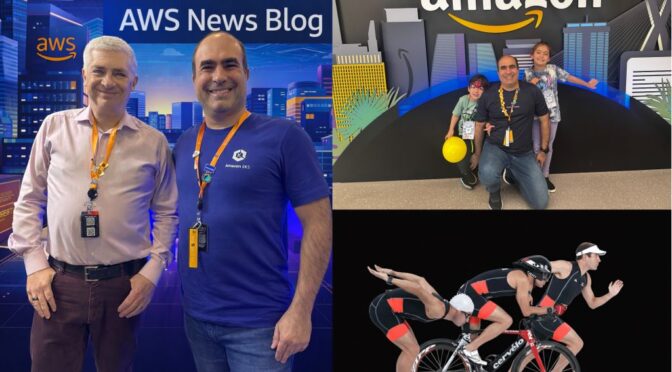
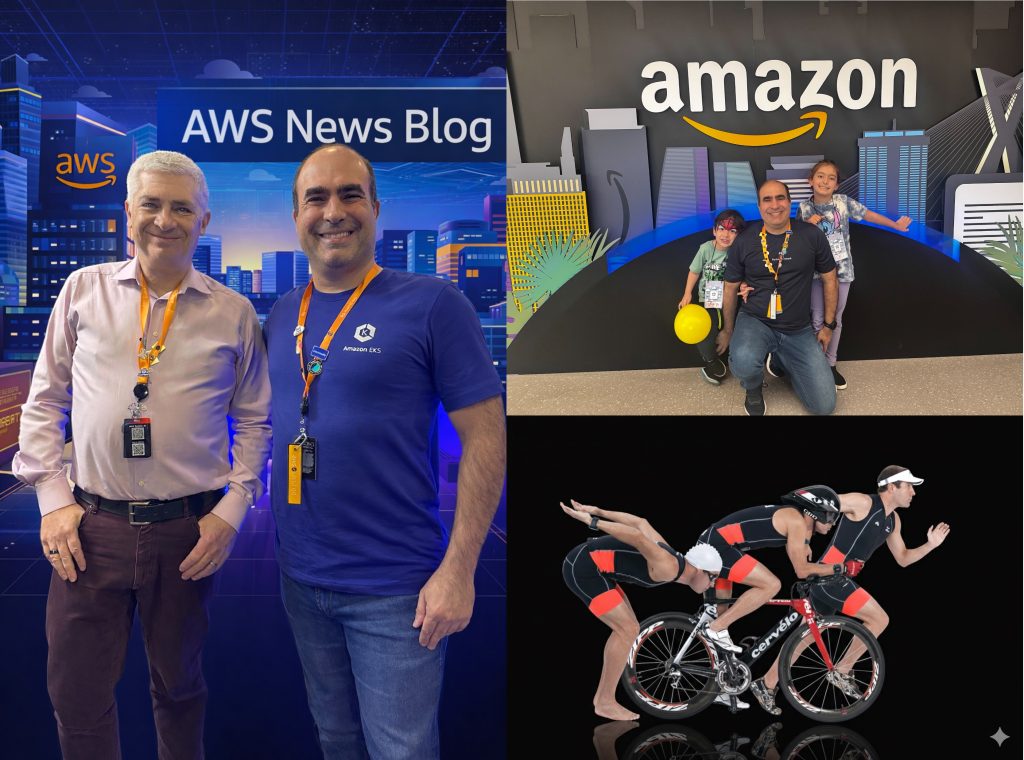
Hello! I’m Daniel Abib, and this is my first AWS Weekly Roundup. I’m a Senior Specialist Solutions Architect at AWS, focused on the generative AI and Amazon Bedrock. With over 28 years of experience in solution architecture, software development, and cloud architecture, I help Startups & Enterprises harness the power of generative AI with Amazon Bedrock. I’ve been at AWS for more than six and a half years, working closely with customers across Latin America, and I’m also passionate about Serverless technologies.

Outside of work and endurance sports, I’m a dedicated father to Cecília (7) and Rafael (4), who keep me busier—and happier— than any distributed system ever could. I’m based in São Paulo, you can find me on LinkedIn and X (@DCABib), where I share insights about generative AI, Amazon Bedrock, AWS serverless services, and the occasional Ironman throwback.
Now, let’s get into this week’s AWS news…
Last week’s launches
Here are some launches and updates from this past week that caught my attention:
- Amazon Redshift increases performance for new queries in dashboards and ETL workloads by up to 7x — Amazon Redshift now delivers up to 7x faster performance for new queries in dashboards and ETL workloads. Queries you run for the first time — without cached results — now execute significantly faster, reducing wait times for interactive dashboards and accelerating your ETL pipelines. This is particularly impactful for workloads with high query variability where cache hits are less frequent.
- NVIDIA Nemotron 3 Super now available on Amazon Bedrock — NVIDIA Nemotron 3 Super is now available in Amazon Bedrock, expanding the lineup of foundation models you can access through the unified Bedrock API. Nemotron 3 Super is a high-performance language model optimized for tasks such as text generation, complex reasoning, summarization, and code generation. You can now invoke Nemotron 3 Super alongside other foundation models in your existing Bedrock workflows, without managing any infrastructure.
- Introducing Nova Forge SDK, a seamless way to customize Nova models for enterprise AI — Nova Forge SDK provides a streamlined way to fine-tune and customize Amazon Nova models for enterprise use cases. You can adapt Nova models to your domain-specific data and deploy them directly within Amazon Bedrock, reducing the complexity of building tailored AI solutions. The SDK handles the heavy lifting of model customization, letting you focus on your business logic rather than the underlying infrastructure.
- Amazon Corretto 26 is now generally available — Amazon Corretto 26, the latest long-term support (LTS) release of the no-cost, production-ready distribution of OpenJDK, is now generally available. Corretto 26 includes the latest Java language features, performance improvements, and security patches, all backed by long-term support from AWS. You can use it across development and production environments on Amazon Linux, Windows, macOS, and Docker images.
- AWS Lambda now supports Availability Zone metadata — AWS Lambda now provides Availability Zone metadata for your function invocations. You can now identify which Availability Zone your Lambda function is running in, enabling better observability, more informed architectural decisions, and simplified troubleshooting for latency-sensitive and multi-AZ workloads. This is particularly useful when correlating Lambda execution with other AZ-aware services in your architecture.
- Amazon CloudWatch Logs now supports log ingestion using HTTP-based protocol — Amazon CloudWatch Logs now supports ingesting logs using an HTTP-based protocol, making it simpler to send logs from applications and services that use standard HTTP endpoints. You can now route logs to CloudWatch Logs without requiring custom agents or additional SDK integrations, lowering the barrier to centralized log management across your workloads.
- Amazon EKS announces 99.99% Service Level Agreement and new 8XL scaling tier for Provisioned Control Plane clusters — Amazon EKS now offers a 99.99% Service Level Agreement (SLA) for clusters running on Provisioned Control Plane, up from the 99.95% SLA offered on standard control plane. EKS is also introducing the 8XL scaling tier, the largest available Provisioned Control Plane tier, which doubles the Kubernetes API server request processing capacity of the next lower 4XL tier — ideal for large-scale workloads like AI/ML training, high-performance computing (HPC), and large-scale data processing.
Other AWS news
Here are some additional posts and resources that you might find interesting:
- Kiro for students — Kiro is now available for students, giving the next generation of builders access to AI-powered development tools at no cost. As Swami Sivasubramanian shared on LinkedIn, “Students are the future decision-makers shaping technology” — and Kiro gives them hands-on experience building with AI from day one. If you’re a student or know someone who is, this is a great opportunity to start building with AI-assisted development.
- Strands Steering Hooks achieved 100% agent accuracy — The Strands Agents team published results showing that Steering Hooks can achieve 100% agent accuracy, outperforming both prompt engineering and rigid workflow approaches for controlling agent behavior. As Swami highlighted on LinkedIn, building reliable AI agents often means rethinking how we guide model behavior — and Steering Hooks offer a compelling new path to agent reliability.
- Introducing Badges on AWS Builder Center — AWS Builder Center now features badges that recognize your contributions and achievements within the builder community. You can earn badges by sharing solutions, participating in challenges, and engaging with fellow builders. It’s a great way to showcase your expertise and track your growth.
- Keep Building Together: The Power of Community — A thoughtful read on the power of community-driven learning and collaboration in the AWS ecosystem. Whether you’re just getting started with AWS or you’ve been building for years, the builder community is a place to connect, share knowledge, and grow together. I highly recommend checking it out.
Upcoming AWS events
Check your calendar and sign up for upcoming AWS events:
- AWS Summits — Join AWS Summits in 2026, free in-person events where you can explore emerging cloud and AI technologies, learn best practices, and network with industry peers and experts. Upcoming Summits include Paris (April 1), London (April 22), Bengaluru (April 23–24), Singapore (May 6), Tel Aviv (May 6), and Stockholm (May 7).
- AWS Community Days — Community-led conferences where content is planned, sourced, and delivered by community leaders, featuring technical discussions, workshops, and hands-on labs. Upcoming events include San Francisco (April 10) and Romania (April 23–24).
- AWSome Women Summit LATAM — Taking place on March 28 in Mexico City, this event celebrates and empowers women in cloud technology across Latin America. A fantastic initiative for the LATAM tech community.
Join the AWS Builder Center to connect with builders, share solutions, and access content that supports your development. Browse the AWS Events and Webinars for upcoming AWS-led in-person and virtual events and developer-focused events.
That’s all for this week. Check back next Monday for another Weekly Roundup!
This post is part of our Weekly Roundup series. Check back each week for a quick roundup of interesting news and announcements from AWS!
20 years in the AWS Cloud – how time flies!
AWS has reached its 20th anniversary! With a steady pace of innovation, AWS has grown to offer over 240 comprehensive cloud services and continues to launch thousands of new features annually for millions of customers. During this time, over 4,700 posts have been published on this blog—more than double the number since Jeff Barr wrote the 10th anniversary post.
AWS changed my life
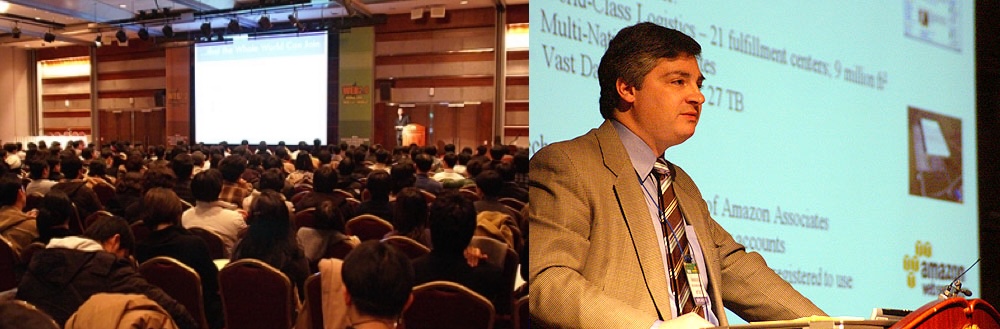
Reflecting on what I was doing 20 years ago, I met Jeff in Seoul on March 13, 2006, when he came as the keynote speaker for the Korea NGWeb conference. At that time, Amazon was one of the first pioneers to initiate an API economy, introducing ecommerce API services. After the keynote speech, he returned home that evening, and I believe he wrote the Amazon S3 launch blog post on the flight back to the United States.

That short meeting with him brought significant changes to my life. He became my role model as a blogger, and I began building API-based services in my company and opening them to third-party developers. When I was a PhD student while taking a break from work, I realized that for individual researchers like me, AWS Cloud services are powerful tools for conducting large-scale research projects. After returning to work, my company became one of the first AWS customers in Korea in 2014. Countless developers—myself included—have embraced cloud computing and actively used its capabilities to accomplish what was previously impossible.
Over the past decade, the technology landscape has transformed dramatically. Deep learning emerged as a breakthrough in AI, evolving through generative AI based on large language models (LLMs) to today’s agentic AI technology. Jeff wrote, “When looking into the future, you need to be able to distinguish between flashy distractions and genuine trends, while remaining flexible enough to pivot if yesterday’s niche becomes today’s mainstream technology.” This principle guides how AWS approaches innovation—we start by listening to what customers truly need. The real trend isn’t pursuing every emerging technology, but rather reimagining solutions that address customers’ most critical challenges.
20 years of AWS
For the first 10 years, Jeff selected his favorite AWS launches and blog posts. Amazon S3, Amazon EC2 (2006), Amazon Relational Database Service, Amazon Virtual Private Cloud (2009), Amazon DynamoDB, Amazon Redshift (2012), Amazon WorkSpaces, Amazon Kinesis (2013), AWS Lambda (2014), and AWS IoT (2015).

While I also hate to play favorites, I want to choose some of my favorite AWS blog posts of the past decade.
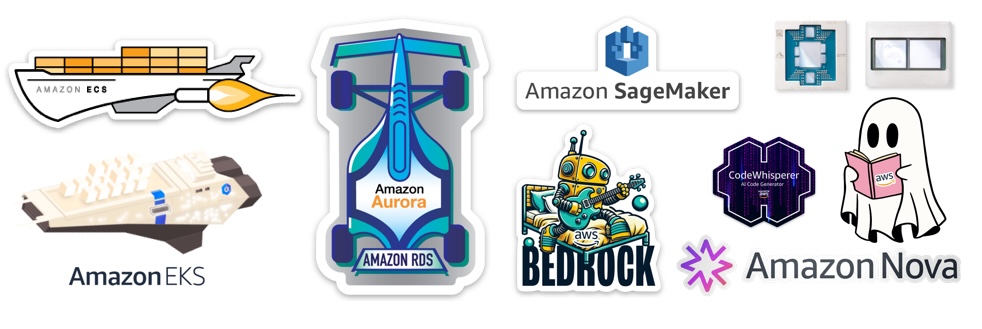
- Deploying containers easily (2014) – Amazon Elastic Container Service makes it straightforward for you to run any number of containers across a managed cluster of Amazon EC2 instances using powerful APIs and other tools. In 2017, we launched Amazon Elastic Kubernetes Service as a fully managed Kubernetes service and AWS Fargate as a serverless deployment option.
- High availability database at global scale (2017) – Amazon Aurora is a modern relational database service offering performance and high availability at scale. In 2018, we launched Amazon Aurora Serverless v1, and this serverless database evolved to Amazon Aurora Serverless v2 to scale down to zero. In 2025, we also launched Amazon Aurora DSQL is the fastest serverless distributed SQL database for always available applications.
- Machine learning (ML) at your fingertips (2017) – Amazon SageMaker is a fully managed end-to-end ML service that data scientists, developers, and ML experts can use to quickly build, train, and host machine learning models at scale. In 2024, we launched the next generation of Amazon SageMaker, a unified platform for data, analytics, and AI and introduced Amazon SageMaker AI to focus specifically on building, training, and deploying AI and ML models at scale.
- Best price performance for cloud workloads (2018) – We launched Amazon EC2 A1 instances powered by the first generation of Arm-based AWS Graviton Processors designed to deliver the best price performance for your cloud workloads. Last year, we previewed EC2 M9g instances powered by AWS Graviton5 processors. Over 90,000 AWS customers have reaped the benefits of Graviton supporting popular AWS services such as Amazon ECS and Amazon EKS, AWS Lambda, Amazon RDS, Amazon ElastiCache, Amazon EMR, and Amazon OpenSearch Service.
- Run AWS Cloud in your data center (2019) – AWS Outposts is a family of fully managed services delivering AWS infrastructure and services to virtually any on-premises or edge location for a truly consistent hybrid experience. Now, AWS Outposts is available in a variety of form factors, from 1U and 2U Outposts servers to 42U Outposts racks, and multiple rack deployments. Customers such as DISH, Fanduel, Morningstar, Philips, and others use Outposts in workloads requiring low latency access to on-premises systems, local data processing, data residency, and application migration with local system interdependencies.
- Best price performance for ML workloads (2019) – We launched Amazon EC2 Inf1 instances powered by the first generation of AWS Inferentia chips designed to provide fast, low-latency inferencing. In 2022, we launched Amazon EC2 Trn1 instances powered by the first generation of AWS Trainium chips optimized for high performance AI training. Last year, we launched Amazon EC2 Trn3 UltraServers powered by Trainium3 to deliver the best token economics for next-generation generative AI applications. Customers such as Anthropic, Decart, poolside, Databricks, Ricoh, Karakuri, SplashMusic, and others are realizing performance and cost benefits of Trainium-based instances and UltraServers.
- Build your generative AI apps on AWS (2023) – Amazon Bedrock is a fully managed service that offers a choice of industry leading AI models along with a broad set of capabilities that you need to build generative AI applications, simplifying development with security, privacy, and responsible AI. Last year, we introduced Amazon Bedrock AgentCore, an agentic platform for building, deploying, and operating effective agents securely at scale. Now, more than 100,000 customers worldwide choose Amazon Bedrock to deliver personalized experiences, automate complex workflows, and uncover actionable insights.
- Your AI coding companion (2023) – We launched Amazon CodeWhisperer as the industry’s first cloud-based AI coding assistant service. The service delivered code generation from comments, open-source code reference tracking, and vulnerability scanning capabilities. In 2024, we rebranded the service to Amazon Q Developer and expanded its features to include a chat-based assistant in the console, project-based code generation, and code transformation tools. In 2025, this service evolved into Kiro, a new agentic AI development tool that brings structure to AI coding through spec-driven development, taking projects from prototype to production. Recently, Kiro previewed an autonomous agent, a frontier agent that works independently on development tasks, maintaining context and learning from every interaction.
- Broaden your AI model choices (2024) – We launched Amazon Titan models further increasing cost-effective AI model choice for text and multimodal needs in Amazon Bedrock. At AWS re:Invent 2024, we announced Amazon Nova models that delivers frontier intelligence and industry leading price performance. Now Amazon Nova has a portfolio of AI offerings—including Amazon Nova models, Amazon Nova Forge, a new service to build your own frontier models; and Amazon Nova Act, a new service to build agents that automate browser-based UI workflows powered by a custom Amazon Nova 2 Lite model.
Build with AI: Your path forward
A decade ago, AWS responded to the emergence of deep learning by launching the broadest and deepest ML services, such as Amazon SageMaker, democratizing AI for a wide range of customers—from individual developers and startups to large enterprises—regardless of their technical expertise.
AI technology has advanced significantly, but building and deploying AI models and applications still remains complex for many developers and organizations. AWS offers the broadest selection of AI models through Amazon Bedrock, including leading providers such as Anthropic and OpenAI. By using our model training and inference infrastructure and responsible AI both practical and scalable, you can accelerate trusted AI innovation while maintaining control of your data and costs—all built on our global infrastructure’s operational excellence.
Reinvent your idea, keep on learning, build confidently with AI you can trust, and share your successes with us! New AWS customers receive up to $200 in credits to try AWS AI for free. If you’re a student, start building with Kiro for free using 1,000 credits per month for one year.
— Channy
Interesting Message Stored in Cowrie Logs, (Wed, Mar 18th)
This activity was found and reported by BACS student Adam Thorman as part of one of his assignments which I posted his final paper [1] last week. This activity appeared to only have occurred on the 19 Feb 2026 where at least 2 sensors detected on the same day by DShield sensor in the cowrie logs an echo command that included: "MAGIC_PAYLOAD_KILLER_HERE_OR_LEAVE_EMPTY_iranbot_was_here". My DShield sensor captured activity from source IP 64.89.161.198 between 30 Jan – 22 Feb 2026 that included portscans, a successful login via Telnet (TCP/23) and web access that included all the activity listed below captured by the DShield sensor (cowrie, webhoneypot & iptables logs).
Our First 2026 Heroes Cohort Is Here!
We’re thrilled to celebrate three exceptional developer community leaders as AWS Heroes. These individuals represent the heart of what makes the AWS community so vibrant. In addition to sharing technical knowledge, they build connections, forge genuine human relationships, and create pathways for others to grow. From pioneering cloud culture in mountain villages to leading cybersecurity education across continents, these Heroes demonstrate that true leadership extends beyond technical expertise to the communities we build and the lives we impact.
Maurizio Argoneto – Pignola, Italy
Community Hero Maurizio is a CTO and organizer of the AWS User Group Basilicata, recognized for his dedication to building tech ecosystems where they previously did not exist. For over a decade, he has pioneered cloud culture through a philosophy centered on genuine human connection and knowledge transfer. He founded an international tech conference in a small mountain village, creating a unique space where global experts and local talent meet, blending deep technical sessions on cloud architectures, DevOps, and web scaling with unconventional networking experiences. Beyond organizing events, Maurizio is a tireless mentor working across generations, which span from introducing children to coding to helping university students and professionals transition into cloud architecture. His impact is defined by a rare combination of technical leadership and inclusive community building that draws people from across Europe.
Ray Goh – Singapore
Artificial Intelligence Hero Ray Goh is a seasoned AWS machine learning and AI community leader based in Singapore and a long-standing contributor in various AWS community programs since 2018, from AWS ASEAN Cloud Warrior and AWS Dev/Cloud Alliance to being part of the pioneer batch of AWS Community Builders in 2020. He founded The Gen-C (a Generative AI Learning Community) in 2024, organizing regular public workshops at libraries across Singapore on topics ranging from LLM fine-tuning to AI agents on AWS. Ray has spoken at AWS re:Invent, AWS Summit ASEAN, AWS Community Day Hong Kong, and numerous user group meetups, and guest-authored for the AWS Machine Learning Blog. He spearheaded the world’s largest enterprise AWS DeepRacer program for DBS Bank in 2020, upskilling over 3,100 employees, and trained more than 1,300 ASEAN students in LLM techniques in 2025. His community work extends to skills-based CSR initiatives teaching AI and machine learning to women, children, and youths, with contributions featured on CNBC and Euromoney.
Sheyla Leacock – Panama City, Panama
Security Hero Sheyla Leacock is an IT security professional, mentor, technical author, and international speaker contributing to the global cloud and cybersecurity community. She has spoken at AWS Summit Mexico, AWS Summit LATAM in Peru, and led PeerTalk sessions at AWS re:Invent, while also leading the AWS User Group in Panama and regularly participating in AWS Community Days and regional meetups. Beyond AWS-focused events, she has delivered talks at more than 20 international conferences and publishes technical articles and educational content on AWS cloud computing and cybersecurity. She collaborates with universities as a guest lecturer, supporting the development of emerging technology and cybersecurity talent. Through community leadership, knowledge sharing, and education, she contributes to strengthening the AWS and cybersecurity ecosystem.
Learn More
Visit the AWS Heroes webpage if you’d like to learn more about the AWS Heroes program, or to connect with a Hero near you.
— Taylor
Scans for "adminer", (Wed, Mar 18th)
A very popular target of attackers scanning our honeypots is "phpmyadmin". phpMyAdmin is a script first released in the late 90s, before many security concepts had been discovered. It's rich history of vulnerabilities made it a favorite target. Its alternative, "adminer", began appearing about a decade later (https://www.adminer.org). One of its main "selling" points was simplicity. Adminer is just a single PHP file. It requires no configuration. Copy it to your server, and you are ready to go. "adminer" has a much better security record and claims to prioritize security in its development.
Twenty years of Amazon S3 and building what’s next
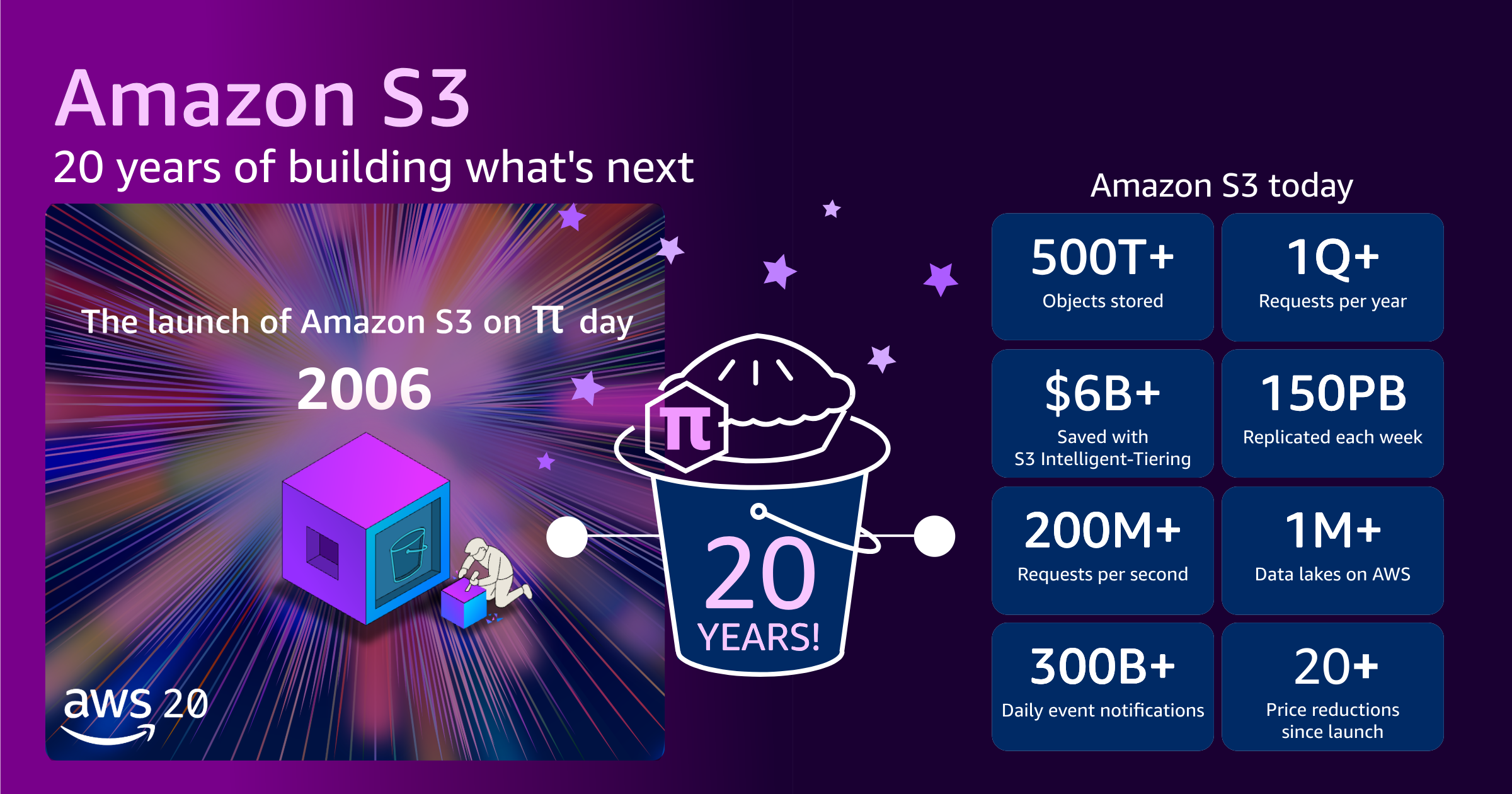
Twenty years ago today, on March 14, 2006, Amazon Simple Storage Service (Amazon S3) quietly launched with a modest one-paragraph announcement on the What’s New page:
Amazon S3 is storage for the Internet. It is designed to make web-scale computing easier for developers. Amazon S3 provides a simple web services interface that can be used to store and retrieve any amount of data, at any time, from anywhere on the web. It gives any developer access to the same highly scalable, reliable, fast, inexpensive data storage infrastructure that Amazon uses to run its own global network of web sites.
Even Jeff Barr’s blog post was only a few paragraphs, written before catching a plane to a developer event in California. No code examples. No demo. Very low fanfare. Nobody knew at the time that this launch would shape our entire industry.
The early days: Building blocks that just work
At its core, S3 introduced two straightforward primitives: PUT to store an object and GET to retrieve it later. But the real innovation was the philosophy behind it: create building blocks that handle the undifferentiated heavy lifting, which freed developers to focus on higher-level work.
From day one, S3 was guided by five fundamentals that remain unchanged today.
Security means your data is protected by default. Durability is designed for 11 nines (99.999999999%), and we operate S3 to be lossless. Availability is designed into every layer, with the assumption that failure is always present and must be handled. Performance is optimized to store virtually any amount of data without degradation. Elasticity means the system automatically grows and shrinks as you add and remove data, with no manual intervention required.
When we get these things right, the service becomes so straightforward that most of you never have to think about how complex these concepts are.
S3 today: Scale beyond imagination
Throughout 20 years, S3 has remained committed to its core fundamentals even as it’s grown to a scale that’s hard to comprehend.
When S3 first launched, it offered approximately one petabyte of total storage capacity across about 400 storage nodes in 15 racks spanning three data centers, with 15 Gbps of total bandwidth. We designed the system to store tens of billions of objects, with a maximum object size of 5 GB. The initial price was 15 cents per gigabyte.
Today, S3 stores more than 500 trillion objects and serves more than 200 million requests per second globally across hundreds of exabytes of data in 123 Availability Zones in 39 AWS Regions, for millions of customers. The maximum object size has grown from 5 GB to 50 TB, a 10,000 fold increase. If you stacked all of the tens of millions S3 hard drives on top of each other, they would reach the International Space Station and almost back.
Even as S3 has grown to support this incredible scale, the price you pay has dropped. Today, AWS charges slightly over 2 cents per gigabyte. That’s a price reduction of approximately 85% since launch in 2006. In parallel, we’ve continued to introduce ways to further optimize storage spend with storage tiers. For example, our customers have collectively saved more than $6 billion in storage costs by using Amazon S3 Intelligent-Tiering as compared to Amazon S3 Standard.
Over the past two decades, the S3 API has been adopted and used as a reference point across the storage industry. Multiple vendors now offer S3 compatible storage tools and systems, implementing the same API patterns and conventions. This means skills and tools developed for S3 often transfer to other storage systems, making the broader storage landscape more accessible.
Despite all of this growth and industry adoption, perhaps the most remarkable achievement is this: the code you wrote for S3 in 2006 still works today, unchanged. Your data went through 20 years of innovation and technical advances. We migrated the infrastructure through multiple generations of disks and storage systems. All the code to handle a request has been rewritten. But the data you stored 20 years ago is still available today, and we’ve maintained complete API backward compatibility. That’s our commitment to delivering a service that continually “just works.”
The engineering behind the scale
What makes S3 possible at this scale? Continuous innovation in engineering.
Much of what follows is drawn from a conversation between Mai-Lan Tomsen Bukovec, VP of Data and Analytics at AWS, and Gergely Orosz of The Pragmatic Engineer. The in-depth interview goes further into the technical details for those who want to go deeper. In the following paragraphs, I share some examples:
At the heart of S3 durability is a system of microservices that continuously inspect every single byte across the entire fleet. These auditor services examine data and automatically trigger repair systems the moment they detect signs of degradation. S3 is designed to be lossless: the 11 nines design goal reflects how the replication factor and re-replication fleet are sized, but the system is built so that objects aren’t lost.
S3 engineers use formal methods and automated reasoning in production to mathematically prove correctness. When engineers check in code to the index subsystem, automated proofs verify that consistency hasn’t regressed. This same approach proves correctness in cross-Region replication or for access policies.
Over the past 8 years, AWS has been progressively rewriting performance-critical code in the S3 request path in Rust. Blob movement and disk storage have been rewritten, and work is actively ongoing across other components. Beyond raw performance, Rust’s type system and memory safety guarantees eliminate entire classes of bugs at compile time. This is an essential property when operating at S3 scale and correctness requirements.
S3 is built on a design philosophy: “Scale is to your advantage.” Engineers design systems so that increased scale improves attributes for all users. The larger S3 gets, the more de-correlated workloads become, which improves reliability for everyone.
Looking forward
The vision for S3 extends beyond being a storage service to becoming the universal foundation for all data and AI workloads. Our vision is simple: you store any type of data one time in S3, and you work with it directly, without moving data between specialized systems. This approach reduces costs, eliminates complexity, and removes the need for multiple copies of the same data.
Here are a few standout launches from recent years:
- S3 Tables – Fully managed Apache Iceberg tables with automated maintenance that optimize query efficiency and reduce storage cost over time.
- S3 Vectors – Native vector storage for semantic search and RAG, supporting up to 2 billion vectors per index with sub-100ms query latency. In only 5 months (July–December 2025), you created more than 250,000 indices, ingested more than 40 billion vectors, and performed more than 1 billion queries.
- S3 Metadata – Centralized metadata for instant data discovery, removing the need to recursively list large buckets for cataloging and significantly reducing time-to-insight for large data lakes.
Each of these capabilities operates at S3 cost structure. You can handle multiple data types that traditionally required expensive databases or specialized systems but are now economically feasible at scale.
From 1 petabyte to hundreds of exabytes. From 15 cents to 2 cents per gigabyte. From simple object storage to the foundation for AI and analytics. Through it all, our five fundamentals–security, durability, availability, performance, and elasticity–remain unchanged, and your code from 2006 still works today.
Here’s to the next 20 years of innovation on Amazon S3.
A React-based phishing page with credential exfiltration via EmailJS, (Fri, Mar 13th)
On Wednesday, a phishing message made its way into our handler inbox that contained a fairly typical low-quality lure, but turned out to be quite interesting in the end nonetheless. That is because the accompanying credential stealing web page was dynamically constructed using React and used a legitimate e-mail service for credential collection.
Introducing account regional namespaces for Amazon S3 general purpose buckets
Today, we’re announcing a new feature of Amazon Simple Storage Service (Amazon S3) you can use to create general purpose buckets in your own account regional namespace simplifying bucket creation and management as your data storage needs grow in size and scope. You can create general purpose bucket names across multiple AWS Regions with assurance that your desired bucket names will always be available for you to use.
With this feature, you can predictably name and create general purpose buckets in your own account regional namespace by appending your account’s unique suffix in your requested bucket name. For example, I can create the bucket mybucket-123456789012-us-east-1-an in my account regional namespace. mybucket is the bucket name prefix that I specified, then I add my account regional suffix to the requested bucket name: -123456789012-us-east-1-an. If another account tries to create buckets using my account’s suffix, their requests will be automatically rejected.
Your security teams can use AWS Identity and Access Management (AWS IAM) policies and AWS Organizations service control policies to enforce that your employees only create buckets in their account regional namespace using the new s3:x-amz-bucket-namespace condition key, helping teams adopt the account regional namespace across your organization.
Create your S3 bucket with account regional namespace in action
To get started, choose Create bucket in the Amazon S3 console. To create your bucket in your account regional namespace, choose Account regional namespace. If you choose this option, you can create your bucket with any name that is unique to your account and region.
This configuration supports all of the same features as general purpose buckets in the global namespace. The only difference is that only your account can use bucket names with your account’s suffix. The bucket name prefix and the account regional suffix combined must be between 3 and 63 characters long.

Using the AWS Command Line Interface (AWS CLI), you can create a bucket with account regional namespace by specifying the x-amz-bucket-namespace:account-regional request header and providing a compatible bucket name.
$ aws s3api create-bucket --bucket mybucket-123456789012-us-east-1-an
--bucket-namespace account-regional
--region us-east-1
You can use the AWS SDK for Python (Boto3) to create a bucket with account regional namespace using CreateBucket API request.
import boto3
class AccountRegionalBucketCreator:
"""Creates S3 buckets using account-regional namespace feature."""
ACCOUNT_REGIONAL_SUFFIX = "-an"
def __init__(self, s3_client, sts_client):
self.s3_client = s3_client
self.sts_client = sts_client
def create_account_regional_bucket(self, prefix):
"""
Creates an account-regional S3 bucket with the specified prefix.
Resolves caller AWS account ID using the STS GetCallerIdentity API.
Format: ---an
"""
account_id = self.sts_client.get_caller_identity()['Account']
region = self.s3_client.meta.region_name
bucket_name = self._generate_account_regional_bucket_name(
prefix, account_id, region
)
params = {
"Bucket": bucket_name,
"BucketNamespace": "account-regional"
}
if region != "us-east-1":
params["CreateBucketConfiguration"] = {
"LocationConstraint": region
}
return self.s3_client.create_bucket(**params)
def _generate_account_regional_bucket_name(self, prefix, account_id, region):
return f"{prefix}-{account_id}-{region}{self.ACCOUNT_REGIONAL_SUFFIX}"
if __name__ == '__main__':
s3_client = boto3.client('s3')
sts_client = boto3.client('sts')
creator = AccountRegionalBucketCreator(s3_client, sts_client)
response = creator.create_account_regional_bucket('test-python-sdk')
print(f"Bucket created: {response}")
You can update your infrastructure as code (IaC) tools, such as AWS CloudFormation, to simplify creating buckets in your account regional namespace. AWS CloudFormation offers the pseudo parameters, AWS::AccountId and AWS::Region, making it easy to build CloudFormation templates that create account regional namespace buckets.
The following example demonstrates how you can update your existing CloudFormation templates to start creating buckets in your account regional namespace:
BucketName: !Sub "amzn-s3-demo-bucket-${AWS::AccountId}-${AWS::Region}-an"
BucketNamespace: "account-regional"
Alternatively, you can also use the BucketNamePrefix property to update your CloudFormation template. By using the BucketNamePrefix, you can provide only the customer defined portion of the bucket name and then it automatically adds the account regional namespace suffix based on the requesting AWS account and Region specified.
BucketNamePrefix: 'amzn-s3-demo-bucket'
BucketNamespace: "account-regional"
Using these options, you can build a custom CloudFormation template to easily create general purpose buckets in your account regional namespace.
Things to know
You can’t rename your existing global buckets to bucket names with account regional namespace, but you can create new general purpose buckets in your account regional namespace. Also, the account regional namespace is only supported for general purpose buckets. S3 table buckets and vector buckets already exist in an account-level namespace and S3 directory buckets exist in a zonal namespace.
To learn more, visit Namespaces for general purpose buckets in the Amazon S3 User Guide.
Now available
Creating general purpose buckets in your account regional namespace in Amazon S3 is now available in 37 AWS Regions including the AWS China and AWS GovCloud (US) Regions. You can create general purpose buckets in your account regional namespace at no additional cost.
Give it a try in the Amazon S3 console today and send feedback to AWS re:Post for Amazon S3 or through your usual AWS Support contacts.
— Channy
AWS Weekly Roundup: Amazon Connect Health, Bedrock AgentCore Policy, GameDay Europe, and more (March 9, 2026)
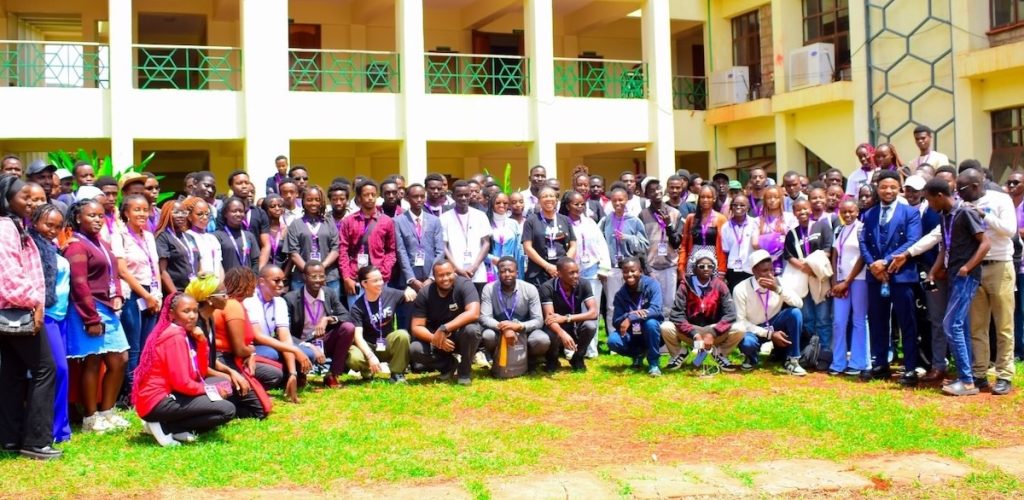
Fiti AWS Student Community Kenya!
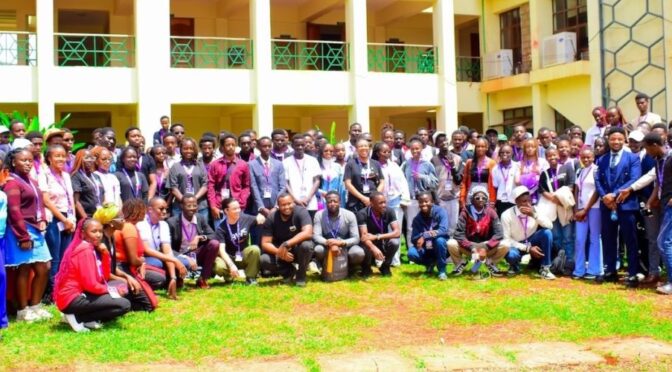
Last week was an incredible whirlwind: a round of meetups, hands-on workshops, and career discussions across Kenya that culminated with the AWS Student Community Day at Meru University of Science and Technology, with keynotes from my colleagues Veliswa and Tiffany, and sessions on everything from GitOps to cloud-native engineering, and a whole lot of AI agent building.
![]() |
![]() |
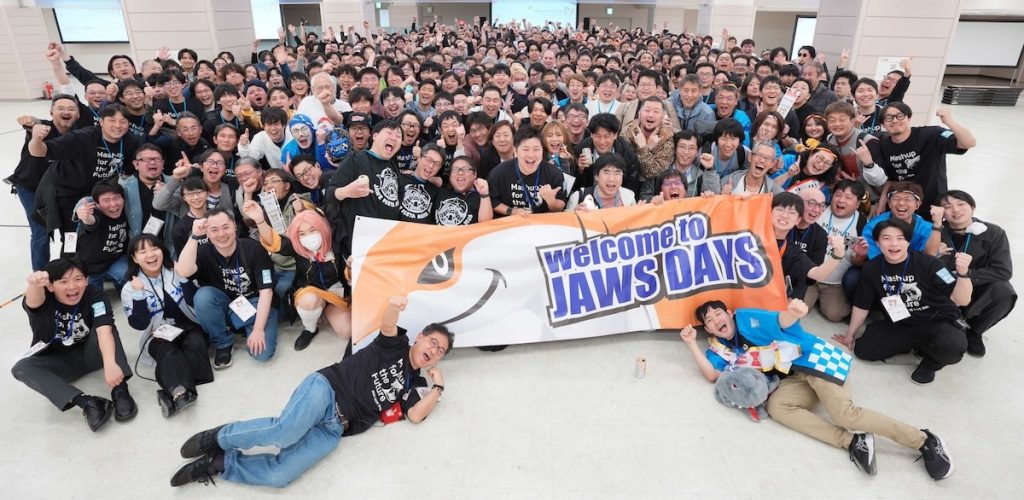
JAWS Days 2026 is the largest AWS Community Day in the world, with over 1,500 attendees on March 7th. This event started with a keynote speech on building an AI-driven development team by Jeff Barr, and included over 100 technical and community experience sessions, lightning talks, and workshops such as Game Days, Builders Card Challenges, and networking parties.
Now, let’s get into this week’s AWS news…
Last week’s launches
Here are some launches and updates from this past week that caught my attention:
- Introducing Amazon Connect Health, Agentic AI Built for Healthcare — Amazon Connect Health is now generally available with five purpose-built AI agents for healthcare: patient verification, appointment management, patient insights, ambient documentation, and medical coding. All features are HIPAA-eligible and deployable within existing clinical workflows in days.
- Policy in Amazon Bedrock AgentCore is now generally available — You can now use centralized, fine-grained controls for agent-tool interactions that operate outside your agent code. Security and compliance teams can define tool access and input validation rules using natural language that automatically converts to Cedar, the AWS open-source policy language.
- Introducing OpenClaw on Amazon Lightsail to run your autonomous private AI agents — You can deploy a private AI assistant on your own cloud infrastructure with built-in security controls, sandboxed agent sessions, one-click HTTPS, and device pairing authentication. Amazon Bedrock serves as the default model provider, and you can connect to Slack, Telegram, WhatsApp, and Discord.
- AWS announces pricing for VPC Encryption Controls — Starting March 1, 2026, VPC Encryption Controls transitions from free preview to a paid feature. You can audit and enforce encryption-in-transit of all traffic flows within and across VPCs in a region, with monitor mode to detect unencrypted traffic and enforce mode to prevent it.
- Database Savings Plans now supports Amazon OpenSearch Service and Amazon Neptune Analytics — You can save up to 35% on eligible serverless and provisioned instance usage with a one-year commitment. Savings Plans automatically apply regardless of engine, instance family, size, or AWS Region.
- AWS Elastic Beanstalk now offers AI-powered environment analysis — When your environment health is degraded, Elastic Beanstalk can now collect recent events, instance health, and logs and send them to Amazon Bedrock for analysis, providing step-by-step troubleshooting recommendations tailored to your environment’s current state.
- AWS simplifies IAM role creation and setup in service workflows — You can now create and configure IAM roles directly within service workflows through a new in-console panel, without switching to the IAM console. The feature supports Amazon EC2, Lambda, EKS, ECS, Glue, CloudFormation, and more.
- Accelerate Lambda durable functions development with new Kiro power — You can now build resilient, long-running multi-step applications and AI workflows faster with AI agent-assisted development in Kiro. The power dynamically loads guidance on replay models, step and wait operations, concurrent execution patterns, error handling, and deployment best practices.
- Amazon GameLift Servers launches DDoS Protection — You can now protect session-based multiplayer games against DDoS attacks with a co-located relay network that authenticates client traffic using access tokens and enforces per-player traffic limits, at no additional cost to GameLift Servers customers.
For a full list of AWS announcements, be sure to keep an eye on the What’s New with AWS page.
From AWS community
Here are my personal favorite posts from AWS community and my colleagues:
- I Built a Portable AI Memory Layer with MCP, AWS Bedrock, and a Chrome Extension — Learn how to build a persistent memory layer for AI agents using MCP and Amazon Bedrock, packaged as a Chrome extension that carries context across sessions and applications.
- When the Model Is the Machine — Mike Chambers built an experimental app where an AI agent generates a complete, interactive web application at runtime from a single prompt — no codebase, no framework, no persistent state. A thought-provoking exploration of what happens when the model becomes the runtime.
Upcoming AWS events
Check your calendar and sign up for upcoming AWS events:
- AWS Community GameDay Europe — Think you know AWS? Prove it at the AWS Community GameDay Europe on March 17, a gamified learning event where teams compete to solve real-world technical challenges using AWS services.
- AWS at NVIDIA GTC 2026 — Join us at our AWS sessions, booths, demos, and ancillary events in NVIDIA GTC 2026 on March 16 – 19, 2026 in San Jose. You can receive 20% off event passes through AWS and request a 1:1 meeting at GTC.
- AWS Summits — Join AWS Summits in 2026: free in-person events where you can explore emerging cloud and AI technologies, learn best practices, and network with industry peers and experts. Upcoming Summits include Paris (April 1), London (April 22), and Bengaluru (April 23–24).
- AWS Community Days — Community-led conferences where content is planned, sourced, and delivered by community leaders. Upcoming events include Slovakia (March 11), Pune (March 21), and the AWSome Women Summit LATAM in Mexico City (March 28)
Browse here for upcoming AWS led in-person and virtual events, startup events, and developer-focused events.
That’s all for this week. Check back next Monday for another Weekly Roundup!