Introducing AWS Capabilities by Region for easier Regional planning and faster global deployments

This post was originally published on this site

At AWS, a common question we hear is: “Which AWS capabilities are available in different Regions?” It’s a critical question whether you’re planning Regional expansion, ensuring compliance with data residency requirements, or architecting for disaster recovery.

Today, I’m excited to introduce AWS Capabilities by Region, a new planning tool that helps you discover and compare AWS services, features, APIs, and AWS CloudFormation resources across Regions. You can explore service availability through an interactive interface, compare multiple Regions side-by-side, and view forward-looking roadmap information. This detailed visibility helps you make informed decisions about global deployments and avoid project delays and costly rework.

Getting started with Regional comparison
To get started, go to AWS Builder Center and choose AWS Capabilities and Start Exploring. When you select Services and features, you can choose the AWS Regions you’re most interested in from the dropdown list. You can use the search box to quickly find specific services or features. For example, I chose US (N. Virginia), Asia Pacific (Seoul), and Asia Pacific (Taipei) Regions to compare Amazon Simple Storage Service (Amazon S3) features.

Now I can view the availability of services and features in my chosen Regions and also see when they’re expected to be released. Select Show only common features to identify capabilities consistently available across all selected Regions, ensuring you design with services you can use everywhere.

The result will indicate availability using the following states: Available (live in the region); Planning (evaluating launch strategy); Not Expanding (will not launch in region); and 2026 Q1 (directional launch planning for the specified quarter).

In addition to exploring services and features, AWS Capabilities by Region also helps you explore available APIs and CloudFormation resources. As an example, to explore API operations, I added Europe (Stockholm) and Middle East (UAE) Regions to compare Amazon DynamoDB features across different geographies. The tool lets you view and search the availability of API operations in each Region.

The CloudFormation resources tab helps you verify Regional support for specific resource types before writing your templates. You can search by Service, Type, Property, and Config.For instance, when planning an Amazon API Gateway deployment, you can check the availability of resource types like AWS::ApiGateway::Account.

You can also search detailed resources such as Amazon Elastic Compute Cloud (Amazon EC2) instance type availability, including specialized instances such as Graviton-based, GPU-enabled, and memory-optimized variants. For example, I searched 7th generation compute-optimized metal instances and could find c7i.metal-24xl and c7i.metal-48xl instances are available across all targeted Regions.

Beyond the interactive interface, the AWS Capabilities by Region data is also accessible through the AWS Knowledge MCP Server. This allows you to automate Region expansion planning, generate AI-powered recommendations for Region and service selection, and integrate Regional capability checks directly into your development workflows and CI/CD pipelines.

Now available
You can begin exploring AWS Capabilities by Region in AWS Builder Center immediately. The Knowledge MCP server is also publicly accessible at no cost and does not require an AWS account. Usage is subject to rate limits. Follow the getting started guide for setup instructions.

We would love to hear your feedback, so please send us any suggestions through the Builder Support page.

Channy

AWS Weekly Roundup: Project Rainier online, Amazon Nova, Amazon Bedrock, and more (November 3, 2025)

This post was originally published on this site

Last week I met Jeff Barr at the AWS Shenzhen Community Day. Jeff shared stories about how builders around the world are experimenting with generative AI and encouraged local developers to keep pushing ideas into real prototypes. Many attendees stayed after the sessions to discuss model grounding, evaluation, and how to bring generative AI into real applications.

Community builders showcased creative Kiro-themed demos, AI-powered IoT projects, and student-led experiments. It was inspiring to see new developers, students, and long-time Amazon Web Services (AWS) community leaders connecting over shared curiosity and excitement for generative AI innovation.

Project Rainier, one of the world’s most powerful operational AI supercomputers is now online. Built by AWS in close collaboration with Anthropic, Project Rainier brings nearly 500,000 AWS custom-designed Trainium2 chips into service using a new Amazon Elastic Compute (Amazon EC2) UltraServer and EC2 UltraCluster architecture designed for high-bandwidth, low-latency model training at hyperscale.

Anthropic is already training and running inference for Claude on Project Rainier, and is expected to scale to more than one million Trainium2 chips across direct usage and Amazon Bedrock by the end of 2025. For architecture details, deployment insights, and behind-the-scenes video of an UltraServer coming online, refer to AWS activates Project Rainier for the full announcement.

Last week’s launches
Here are the launches that got my attention this week:

Additional updates
Here are some additional projects, blog posts, and news items that I found interesting:

  • Building production-ready 3D pipelines with AWS VAMS and 4D Pipeline – A reference architecture for creating scalable, cloud-based 3D asset pipelines using AWS Visual Asset Management System (VAMS) and 4D Pipeline, supporting ingest, validation, collaborative review, and distribution across games, visual effects (VFX), and digital twins.
  • Amazon Location Service introduces new API key restrictions – You can now create granular security policies with bundle IDs to restrict API access to specific mobile applications, improving access control and strengthening application-level security across location-based workloads.
  • AWS Clean Rooms launches advanced SQL configurations – A performance enhancement for Spark SQL workloads that supports runtime customization of Spark properties and compute sizes, plus table caching for faster and more cost-efficient processing of large analytical queries.
  • AWS Serverless MCP Server adds event source mappings (ESM) tools – A capability for event-driven serverless applications that supports configuration, performance tuning, and troubleshooting of AWS Lambda event source mappings, including AWS Serverless Application Model (AWS SAM) template generation and diagnostic insights.
  • AWS IoT Greengrass releases an AI agent context pack – A development accelerator for cloud-connected edge applications that provides ready-to-use instructions, examples, and templates, helping teams integrate generative AI tools such as Amazon Q for faster software creation, testing, and fleet-wide deployment. It’s available as open source on the GitHub repository.
  • AWS Step Functions introduces a new metrics dashboard – You can now view usage, billing, and performance metrics at the state-machine level for standard and express workflows in a single console view, improving visibility and troubleshooting for distributed applications.

Upcoming AWS events
Check your calendars so that you can sign up for these upcoming events:

  • AWS Builder Loft – A community tech space in San Francisco where you can learn from expert sessions, join hands-on workshops, explore AI and emerging technologies, and collaborate with other builders to accelerate their ideas. Browse the upcoming sessions and join the events that interest you.
  • AWS Community Days – Join community-led conferences that feature technical discussions, workshops, and hands-on labs led by experienced AWS users and industry leaders from around the world: Hong Kong (November 2), Abuja (November 8), Cameroon (November 8), and Spain (November 15).
  • AWS Skills Center Seattle 4th Anniversary Celebration – A free, public event on November 20 with a keynote, learned panels, recruiter insights, raffles, and virtual participation options.

Join the AWS Builder Center to learn, build, and connect with builders in the AWS community. Browse here for upcoming in-person events, developer-focused events, and events for startups.

That’s all for this week. Check back next Monday for another Weekly Roundup!

Betty

XWiki SolrSearch Exploit Attempts (CVE-2025-24893) with link to Chicago Gangs/Rappers, (Mon, Nov 3rd)

This post was originally published on this site

XWiki describes itself as "The Advanced Open-Source Enterprise Wiki" and considers itself an alternative to Confluence and MediaWiki. In February, XWiki released an advisory (and patch) for an arbitrary remote code execution vulnerability. Affected was the SolrSearch component, which any user, even with minimal "Guest" privileges, can use. The advisory included PoC code, so it is a bit odd that it took so long for the vulnerability to be widely exploited.

Scans for Port 8530/8531 (TCP). Likely related to WSUS Vulnerability CVE-2025-59287, (Sun, Nov 2nd)

This post was originally published on this site

Sensors reporting firewall logs detected a significant increase in scans for port 8530/TCP and 8531/TCP over the course of last week. Some of these reports originate from Shadowserver, and likely other researchers, but there are also some that do not correspond to known research-related IP addresses.

Build more accurate AI applications with Amazon Nova Web Grounding

This post was originally published on this site

Imagine building AI applications that deliver accurate, current information without the complexity of developing intricate data retrieval systems. Today, we’re excited to announce the general availability of Web Grounding, a new built-in tool for Nova models on Amazon Bedrock.

Web Grounding provides developers with a turnkey Retrieval Augmented Generation (RAG) option that allows the Amazon Nova foundation models to intelligently decide when to retrieve and incorporate relevant up-to-date information based on the context of the prompt. This helps to ground the model output by incorporating cited public sources as context, aiming to reduce hallucinations and improve accuracy.

When should developers use Web Grounding?

Developers should consider using Web Grounding when building applications that require access to current, factual information or need to provide well-cited responses. The capability is particularly valuable across a range of applications, from knowledge-based chat assistants providing up-to-date information about products and services, to content generation tools requiring fact-checking and source verification. It’s also ideal for research assistants that need to synthesize information from multiple current sources, as well as customer support applications where accuracy and verifiability are crucial.

Web Grounding is especially useful when you need to reduce hallucinations in your AI applications or when your use case requires transparent source attribution. Because it automatically handles the retrieval and integration of information, it’s an efficient solution for developers who want to focus on building their applications rather than managing complex RAG implementations.

Getting started
Web Grounding seamlessly integrates with supported Amazon Nova models to handle information retrieval and processing during inference. This eliminates the need to build and maintain complex RAG pipelines, while also providing source attributions that verify the origin of information.

Let’s see an example of asking a question to Nova Premier using Python to call the Amazon Bedrock Converse API with Web Grounding enabled.

First, I created an Amazon Bedrock client using AWS SDK for Python (Boto3) in the usual way. For good practice, I’m using a session, which helps to group configurations and make them reusable. I then create a BedrockRuntimeClient.

try:
    session = boto3.Session(region_name='us-east-1')
    client = session.client(
        'bedrock-runtime')

I then prepare the Amazon Bedrock Converse API payload. It includes a “role” parameter set to “user”, indicating that the message comes from our application’s user (compared to “assistant” for AI-generated responses).

For this demo, I chose the question “What are the current AWS Regions and their locations?” This was selected intentionally because it requires current information, making it useful to demonstrate how Amazon Nova can automatically invoke searches using Web Grounding when it determines that up-to-date knowledge is needed.

# Prepare the conversation in the format expected by Bedrock
question = "What are the current AWS regions and their locations?"
conversation = [
   {
     "role": "user",  # Indicates this message is from the user
     "content": [{"text": question}],  # The actual question text
      }
    ]

First, let’s see what the output is without Web Grounding. I make a call to Amazon Bedrock Converse API.

# Make the API call to Bedrock 
model_id = "us.amazon.nova-premier-v1:0" 
response = client.converse( 
    modelId=model_id, # Which AI model to use 
    messages=conversation, # The conversation history (just our question in this case) 
    )
print(response['output']['message']['content'][0]['text'])

I get a list of all the current AWS Regions and their locations.

Now let’s use Web Grounding. I make a similar call to the Amazon Bedrock Converse API, but declare nova_grounding as one of the tools available to the model.

model_id = "us.amazon.nova-premier-v1:0" 
response = client.converse( 
    modelId=model_id, 
    messages=conversation, 
    toolConfig= {
          "tools":[ 
              {
                "systemTool": {
                   "name": "nova_grounding" # Enables the model to search real-time information
                 }
              }
          ]
     }
)

After processing the response, I can see that the model used Web Grounding to access up-to-date information. The output includes reasoning traces that I can use to follow its thought process and see where it automatically queried external sources. The content of the responses from these external calls appear as [HIDDEN] – a standard practice in AI systems that both protects sensitive information and helps manage output size.

Additionally, the output also includes citationsContent objects containing information about the sources queried by Web Grounding.

Finally, I can see the list of AWS Regions. It finishes with a message right at the end stating that “These are the most current and active AWS regions globally.”

Web Grounding represents a significant step forward in making AI applications more reliable and current with minimum effort. Whether you’re building customer service chat assistants that need to provide up-to-date accurate information, developing research applications that analyze and synthesize information from multiple sources, or creating travel applications that deliver the latest details about destinations and accommodations, Web Grounding can help you deliver more accurate and relevant responses to your users with a convenient turnkey solution that is straightforward to configure and use.

Things to know
Amazon Nova Web Grounding is available today in US East (N. Virginia). Web Grounding will also soon launch on US East (Ohio), and US West (Oregon).

Web Grounding incurs additional cost. Refer to the Amazon Bedrock pricing page for more details.

Currently, you can only use Web Grounding with Nova Premier but support for other Nova models will be added soon.

If you haven’t used Amazon Nova before or are looking to go deeper, try this self-paced online workshop where you can learn how to effectively use Amazon Nova foundation models and related features for text, image, and video processing through hands-on exercises.

Matheus Guimaraes | @codingmatheus

Amazon Nova Multimodal Embeddings: State-of-the-art embedding model for agentic RAG and semantic search

This post was originally published on this site

Today, we’re introducing Amazon Nova Multimodal Embeddings, a state-of-the-art multimodal embedding model for agentic retrieval-augmented generation (RAG) and semantic search applications, available in Amazon Bedrock. It is the first unified embedding model that supports text, documents, images, video, and audio through a single model to enable crossmodal retrieval with leading accuracy.

Embedding models convert textual, visual, and audio inputs into numerical representations called embeddings. These embeddings capture the meaning of the input in a way that AI systems can compare, search, and analyze, powering use cases such as semantic search and RAG.

Organizations are increasingly seeking solutions to unlock insights from the growing volume of unstructured data that is spread across text, image, document, video, and audio content. For example, an organization might have product images, brochures that contain infographics and text, and user-uploaded video clips. Embedding models are able to unlock value from unstructured data, however traditional models are typically specialized to handle one content type. This limitation drives customers to either build complex crossmodal embedding solutions or restrict themselves to use cases focused on a single content type. The problem also applies to mixed-modality content types such as documents with interleaved text and images or video with visual, audio, and textual elements where existing models struggle to capture crossmodal relationships effectively.

Nova Multimodal Embeddings supports a unified semantic space for text, documents, images, video, and audio for use cases such as crossmodal search across mixed-modality content, searching with a reference image, and retrieving visual documents.

Evaluating Amazon Nova Multimodal Embeddings performance
We evaluated the model on a broad range of benchmarks, and it delivers leading accuracy out-of-the-box as described in the following table.

Amazon Nova Embeddings benchmarks

Nova Multimodal Embeddings supports a context length of up to 8K tokens, text in up to 200 languages, and accepts inputs via synchronous and asynchronous APIs. Additionally, it supports segmentation (also known as “chunking”) to partition long-form text, video, or audio content into manageable segments, generating embeddings for each portion. Lastly, the model offers four output embedding dimensions, trained using Matryoshka Representation Learning (MRL) that enables low-latency end-to-end retrieval with minimal accuracy changes.

Let’s see how the new model can be used in practice.

Using Amazon Nova Multimodal Embeddings
Getting started with Nova Multimodal Embeddings follows the same pattern as other models in Amazon Bedrock. The model accepts text, documents, images, video, or audio as input and returns numerical embeddings that you can use for semantic search, similarity comparison, or RAG.

Here’s a practical example using the AWS SDK for Python (Boto3) that shows how to create embeddings from different content types and store them for later retrieval. For simplicity, I’ll use Amazon S3 Vectors, a cost-optimized storage with native support for storing and querying vectors at any scale, to store and search the embeddings.

Let’s start with the fundamentals: converting text into embeddings. This example shows how to transform a simple text description into a numerical representation that captures its semantic meaning. These embeddings can later be compared with embeddings from documents, images, videos, or audio to find related content.

To make the code easy to follow, I’ll show a section of the script at a time. The full script is included at the end of this walkthrough.

import json
import base64
import time
import boto3

MODEL_ID = "amazon.nova-2-multimodal-embeddings-v1:0"
EMBEDDING_DIMENSION = 3072

# Initialize Amazon Bedrock Runtime client
bedrock_runtime = boto3.client("bedrock-runtime", region_name="us-east-1")

print(f"Generating text embedding with {MODEL_ID} ...")

# Text to embed
text = "Amazon Nova is a multimodal foundation model"

# Create embedding
request_body = {
    "taskType": "SINGLE_EMBEDDING",
    "singleEmbeddingParams": {
        "embeddingPurpose": "GENERIC_INDEX",
        "embeddingDimension": EMBEDDING_DIMENSION,
        "text": {"truncationMode": "END", "value": text},
    },
}

response = bedrock_runtime.invoke_model(
    body=json.dumps(request_body),
    modelId=MODEL_ID,
    contentType="application/json",
)

# Extract embedding
response_body = json.loads(response["body"].read())
embedding = response_body["embeddings"][0]["embedding"]

print(f"Generated embedding with {len(embedding)} dimensions")

Now we’ll process visual content using the same embedding space using a photo.jpg file in the same folder as the script. This demonstrates the power of multimodality: Nova Multimodal Embeddings is able to capture both textual and visual context into a single embedding that provides enhanced understanding of the document.

Nova Multimodal Embeddings can generate embeddings that are optimized for how they are being used. When indexing for a search or retrieval use case, embeddingPurpose can be set to GENERIC_INDEX. For the query step, embeddingPurpose can be set depending on the type of item to be retrieved. For example, when retrieving documents, embeddingPurpose can be set to DOCUMENT_RETRIEVAL.

# Read and encode image
print(f"Generating image embedding with {MODEL_ID} ...")

with open("photo.jpg", "rb") as f:
    image_bytes = base64.b64encode(f.read()).decode("utf-8")

# Create embedding
request_body = {
    "taskType": "SINGLE_EMBEDDING",
    "singleEmbeddingParams": {
        "embeddingPurpose": "GENERIC_INDEX",
        "embeddingDimension": EMBEDDING_DIMENSION,
        "image": {
            "format": "jpeg",
            "source": {"bytes": image_bytes}
        },
    },
}

response = bedrock_runtime.invoke_model(
    body=json.dumps(request_body),
    modelId=MODEL_ID,
    contentType="application/json",
)

# Extract embedding
response_body = json.loads(response["body"].read())
embedding = response_body["embeddings"][0]["embedding"]

print(f"Generated embedding with {len(embedding)} dimensions")

To process video content, I use the asynchronous API. That’s a requirement for videos that are larger than 25MB when encoded as Base64. First, I upload a local video to an S3 bucket in the same AWS Region.

aws s3 cp presentation.mp4 s3://my-video-bucket/videos/

This example shows how to extract embeddings from both visual and audio components of a video file. The segmentation feature breaks longer videos into manageable chunks, making it practical to search through hours of content efficiently.

# Initialize Amazon S3 client
s3 = boto3.client("s3", region_name="us-east-1")

print(f"Generating video embedding with {MODEL_ID} ...")

# Amazon S3 URIs
S3_VIDEO_URI = "s3://my-video-bucket/videos/presentation.mp4"
S3_EMBEDDING_DESTINATION_URI = "s3://my-embedding-destination-bucket/embeddings-output/"

# Create async embedding job for video with audio
model_input = {
    "taskType": "SEGMENTED_EMBEDDING",
    "segmentedEmbeddingParams": {
        "embeddingPurpose": "GENERIC_INDEX",
        "embeddingDimension": EMBEDDING_DIMENSION,
        "video": {
            "format": "mp4",
            "embeddingMode": "AUDIO_VIDEO_COMBINED",
            "source": {
                "s3Location": {"uri": S3_VIDEO_URI}
            },
            "segmentationConfig": {
                "durationSeconds": 15  # Segment into 15-second chunks
            },
        },
    },
}

response = bedrock_runtime.start_async_invoke(
    modelId=MODEL_ID,
    modelInput=model_input,
    outputDataConfig={
        "s3OutputDataConfig": {
            "s3Uri": S3_EMBEDDING_DESTINATION_URI
        }
    },
)

invocation_arn = response["invocationArn"]
print(f"Async job started: {invocation_arn}")

# Poll until job completes
print("nPolling for job completion...")
while True:
    job = bedrock_runtime.get_async_invoke(invocationArn=invocation_arn)
    status = job["status"]
    print(f"Status: {status}")

    if status != "InProgress":
        break
    time.sleep(15)

# Check if job completed successfully
if status == "Completed":
    output_s3_uri = job["outputDataConfig"]["s3OutputDataConfig"]["s3Uri"]
    print(f"nSuccess! Embeddings at: {output_s3_uri}")

    # Parse S3 URI to get bucket and prefix
    s3_uri_parts = output_s3_uri[5:].split("/", 1)  # Remove "s3://" prefix
    bucket = s3_uri_parts[0]
    prefix = s3_uri_parts[1] if len(s3_uri_parts) > 1 else ""

    # AUDIO_VIDEO_COMBINED mode outputs to embedding-audio-video.jsonl
    # The output_s3_uri already includes the job ID, so just append the filename
    embeddings_key = f"{prefix}/embedding-audio-video.jsonl".lstrip("/")

    print(f"Reading embeddings from: s3://{bucket}/{embeddings_key}")

    # Read and parse JSONL file
    response = s3.get_object(Bucket=bucket, Key=embeddings_key)
    content = response['Body'].read().decode('utf-8')

    embeddings = []
    for line in content.strip().split('n'):
        if line:
            embeddings.append(json.loads(line))

    print(f"nFound {len(embeddings)} video segments:")
    for i, segment in enumerate(embeddings):
        print(f"  Segment {i}: {segment.get('startTime', 0):.1f}s - {segment.get('endTime', 0):.1f}s")
        print(f"    Embedding dimension: {len(segment.get('embedding', []))}")
else:
    print(f"nJob failed: {job.get('failureMessage', 'Unknown error')}")

With our embeddings generated, we need a place to store and search them efficiently. This example demonstrates setting up a vector store using Amazon S3 Vectors, which provides the infrastructure needed for similarity search at scale. Think of this as creating a searchable index where semantically similar content naturally clusters together. When adding an embedding to the index, I use the metadata to specify the original format and the content being indexed.

# Initialize Amazon S3 Vectors client
s3vectors = boto3.client("s3vectors", region_name="us-east-1")

# Configuration
VECTOR_BUCKET = "my-vector-store"
INDEX_NAME = "embeddings"

# Create vector bucket and index (if they don't exist)
try:
    s3vectors.get_vector_bucket(vectorBucketName=VECTOR_BUCKET)
    print(f"Vector bucket {VECTOR_BUCKET} already exists")
except s3vectors.exceptions.NotFoundException:
    s3vectors.create_vector_bucket(vectorBucketName=VECTOR_BUCKET)
    print(f"Created vector bucket: {VECTOR_BUCKET}")

try:
    s3vectors.get_index(vectorBucketName=VECTOR_BUCKET, indexName=INDEX_NAME)
    print(f"Vector index {INDEX_NAME} already exists")
except s3vectors.exceptions.NotFoundException:
    s3vectors.create_index(
        vectorBucketName=VECTOR_BUCKET,
        indexName=INDEX_NAME,
        dimension=EMBEDDING_DIMENSION,
        dataType="float32",
        distanceMetric="cosine"
    )
    print(f"Created index: {INDEX_NAME}")

texts = [
    "Machine learning on AWS",
    "Amazon Bedrock provides foundation models",
    "S3 Vectors enables semantic search"
]

print(f"nGenerating embeddings for {len(texts)} texts...")

# Generate embeddings using Amazon Nova for each text
vectors = []
for text in texts:
    response = bedrock_runtime.invoke_model(
        body=json.dumps({
            "taskType": "SINGLE_EMBEDDING",
            "singleEmbeddingParams": {
                "embeddingDimension": EMBEDDING_DIMENSION,
                "text": {"truncationMode": "END", "value": text}
            }
        }),
        modelId=MODEL_ID,
        accept="application/json",
        contentType="application/json"
    )

    response_body = json.loads(response["body"].read())
    embedding = response_body["embeddings"][0]["embedding"]

    vectors.append({
        "key": f"text:{text[:50]}",  # Unique identifier
        "data": {"float32": embedding},
        "metadata": {"type": "text", "content": text}
    })
    print(f"  ✓ Generated embedding for: {text}")

# Add all vectors to store in a single call
s3vectors.put_vectors(
    vectorBucketName=VECTOR_BUCKET,
    indexName=INDEX_NAME,
    vectors=vectors
)

print(f"nSuccessfully added {len(vectors)} vectors to the store in one put_vectors call!")

This final example demonstrates the capability of searching across different content types with a single query, finding the most similar content regardless of whether it originated from text, images, videos, or audio. The distance scores help you understand how closely related the results are to your original query.

# Text to query
query_text = "foundation models"  

print(f"nGenerating embeddings for query '{query_text}' ...")

# Generate embeddings
response = bedrock_runtime.invoke_model(
    body=json.dumps({
        "taskType": "SINGLE_EMBEDDING",
        "singleEmbeddingParams": {
            "embeddingPurpose": "GENERIC_RETRIEVAL",
            "embeddingDimension": EMBEDDING_DIMENSION,
            "text": {"truncationMode": "END", "value": query_text}
        }
    }),
    modelId=MODEL_ID,
    accept="application/json",
    contentType="application/json"
)

response_body = json.loads(response["body"].read())
query_embedding = response_body["embeddings"][0]["embedding"]

print(f"Searching for similar embeddings...n")

# Search for top 5 most similar vectors
response = s3vectors.query_vectors(
    vectorBucketName=VECTOR_BUCKET,
    indexName=INDEX_NAME,
    queryVector={"float32": query_embedding},
    topK=5,
    returnDistance=True,
    returnMetadata=True
)

# Display results
print(f"Found {len(response['vectors'])} results:n")
for i, result in enumerate(response["vectors"], 1):
    print(f"{i}. {result['key']}")
    print(f"   Distance: {result['distance']:.4f}")
    if result.get("metadata"):
        print(f"   Metadata: {result['metadata']}")
    print()

Crossmodal search is one of the key advantages of multimodal embeddings. With crossmodal search, you can query with text and find relevant images. You can also search for videos using text descriptions, find audio clips that match certain topics, or discover documents based on their visual and textual content. For your reference, the full script with all previous examples merged together is here:

import json
import base64
import time
import boto3

MODEL_ID = "amazon.nova-2-multimodal-embeddings-v1:0"
EMBEDDING_DIMENSION = 3072

# Initialize Amazon Bedrock Runtime client
bedrock_runtime = boto3.client("bedrock-runtime", region_name="us-east-1")

print(f"Generating text embedding with {MODEL_ID} ...")

# Text to embed
text = "Amazon Nova is a multimodal foundation model"

# Create embedding
request_body = {
    "taskType": "SINGLE_EMBEDDING",
    "singleEmbeddingParams": {
        "embeddingPurpose": "GENERIC_INDEX",
        "embeddingDimension": EMBEDDING_DIMENSION,
        "text": {"truncationMode": "END", "value": text},
    },
}

response = bedrock_runtime.invoke_model(
    body=json.dumps(request_body),
    modelId=MODEL_ID,
    contentType="application/json",
)

# Extract embedding
response_body = json.loads(response["body"].read())
embedding = response_body["embeddings"][0]["embedding"]

print(f"Generated embedding with {len(embedding)} dimensions")
# Read and encode image
print(f"Generating image embedding with {MODEL_ID} ...")

with open("photo.jpg", "rb") as f:
    image_bytes = base64.b64encode(f.read()).decode("utf-8")

# Create embedding
request_body = {
    "taskType": "SINGLE_EMBEDDING",
    "singleEmbeddingParams": {
        "embeddingPurpose": "GENERIC_INDEX",
        "embeddingDimension": EMBEDDING_DIMENSION,
        "image": {
            "format": "jpeg",
            "source": {"bytes": image_bytes}
        },
    },
}

response = bedrock_runtime.invoke_model(
    body=json.dumps(request_body),
    modelId=MODEL_ID,
    contentType="application/json",
)

# Extract embedding
response_body = json.loads(response["body"].read())
embedding = response_body["embeddings"][0]["embedding"]

print(f"Generated embedding with {len(embedding)} dimensions")
# Initialize Amazon S3 client
s3 = boto3.client("s3", region_name="us-east-1")

print(f"Generating video embedding with {MODEL_ID} ...")

# Amazon S3 URIs
S3_VIDEO_URI = "s3://my-video-bucket/videos/presentation.mp4"

# Amazon S3 output bucket and location
S3_EMBEDDING_DESTINATION_URI = "s3://my-video-bucket/embeddings-output/"

# Create async embedding job for video with audio
model_input = {
    "taskType": "SEGMENTED_EMBEDDING",
    "segmentedEmbeddingParams": {
        "embeddingPurpose": "GENERIC_INDEX",
        "embeddingDimension": EMBEDDING_DIMENSION,
        "video": {
            "format": "mp4",
            "embeddingMode": "AUDIO_VIDEO_COMBINED",
            "source": {
                "s3Location": {"uri": S3_VIDEO_URI}
            },
            "segmentationConfig": {
                "durationSeconds": 15  # Segment into 15-second chunks
            },
        },
    },
}

response = bedrock_runtime.start_async_invoke(
    modelId=MODEL_ID,
    modelInput=model_input,
    outputDataConfig={
        "s3OutputDataConfig": {
            "s3Uri": S3_EMBEDDING_DESTINATION_URI
        }
    },
)

invocation_arn = response["invocationArn"]
print(f"Async job started: {invocation_arn}")

# Poll until job completes
print("nPolling for job completion...")
while True:
    job = bedrock_runtime.get_async_invoke(invocationArn=invocation_arn)
    status = job["status"]
    print(f"Status: {status}")

    if status != "InProgress":
        break
    time.sleep(15)

# Check if job completed successfully
if status == "Completed":
    output_s3_uri = job["outputDataConfig"]["s3OutputDataConfig"]["s3Uri"]
    print(f"nSuccess! Embeddings at: {output_s3_uri}")

    # Parse S3 URI to get bucket and prefix
    s3_uri_parts = output_s3_uri[5:].split("/", 1)  # Remove "s3://" prefix
    bucket = s3_uri_parts[0]
    prefix = s3_uri_parts[1] if len(s3_uri_parts) > 1 else ""

    # AUDIO_VIDEO_COMBINED mode outputs to embedding-audio-video.jsonl
    # The output_s3_uri already includes the job ID, so just append the filename
    embeddings_key = f"{prefix}/embedding-audio-video.jsonl".lstrip("/")

    print(f"Reading embeddings from: s3://{bucket}/{embeddings_key}")

    # Read and parse JSONL file
    response = s3.get_object(Bucket=bucket, Key=embeddings_key)
    content = response['Body'].read().decode('utf-8')

    embeddings = []
    for line in content.strip().split('n'):
        if line:
            embeddings.append(json.loads(line))

    print(f"nFound {len(embeddings)} video segments:")
    for i, segment in enumerate(embeddings):
        print(f"  Segment {i}: {segment.get('startTime', 0):.1f}s - {segment.get('endTime', 0):.1f}s")
        print(f"    Embedding dimension: {len(segment.get('embedding', []))}")
else:
    print(f"nJob failed: {job.get('failureMessage', 'Unknown error')}")
# Initialize Amazon S3 Vectors client
s3vectors = boto3.client("s3vectors", region_name="us-east-1")

# Configuration
VECTOR_BUCKET = "my-vector-store"
INDEX_NAME = "embeddings"

# Create vector bucket and index (if they don't exist)
try:
    s3vectors.get_vector_bucket(vectorBucketName=VECTOR_BUCKET)
    print(f"Vector bucket {VECTOR_BUCKET} already exists")
except s3vectors.exceptions.NotFoundException:
    s3vectors.create_vector_bucket(vectorBucketName=VECTOR_BUCKET)
    print(f"Created vector bucket: {VECTOR_BUCKET}")

try:
    s3vectors.get_index(vectorBucketName=VECTOR_BUCKET, indexName=INDEX_NAME)
    print(f"Vector index {INDEX_NAME} already exists")
except s3vectors.exceptions.NotFoundException:
    s3vectors.create_index(
        vectorBucketName=VECTOR_BUCKET,
        indexName=INDEX_NAME,
        dimension=EMBEDDING_DIMENSION,
        dataType="float32",
        distanceMetric="cosine"
    )
    print(f"Created index: {INDEX_NAME}")

texts = [
    "Machine learning on AWS",
    "Amazon Bedrock provides foundation models",
    "S3 Vectors enables semantic search"
]

print(f"nGenerating embeddings for {len(texts)} texts...")

# Generate embeddings using Amazon Nova for each text
vectors = []
for text in texts:
    response = bedrock_runtime.invoke_model(
        body=json.dumps({
            "taskType": "SINGLE_EMBEDDING",
            "singleEmbeddingParams": {
                "embeddingPurpose": "GENERIC_INDEX",
                "embeddingDimension": EMBEDDING_DIMENSION,
                "text": {"truncationMode": "END", "value": text}
            }
        }),
        modelId=MODEL_ID,
        accept="application/json",
        contentType="application/json"
    )

    response_body = json.loads(response["body"].read())
    embedding = response_body["embeddings"][0]["embedding"]

    vectors.append({
        "key": f"text:{text[:50]}",  # Unique identifier
        "data": {"float32": embedding},
        "metadata": {"type": "text", "content": text}
    })
    print(f"  ✓ Generated embedding for: {text}")

# Add all vectors to store in a single call
s3vectors.put_vectors(
    vectorBucketName=VECTOR_BUCKET,
    indexName=INDEX_NAME,
    vectors=vectors
)

print(f"nSuccessfully added {len(vectors)} vectors to the store in one put_vectors call!")
# Text to query
query_text = "foundation models"  

print(f"nGenerating embeddings for query '{query_text}' ...")

# Generate embeddings
response = bedrock_runtime.invoke_model(
    body=json.dumps({
        "taskType": "SINGLE_EMBEDDING",
        "singleEmbeddingParams": {
            "embeddingPurpose": "GENERIC_RETRIEVAL",
            "embeddingDimension": EMBEDDING_DIMENSION,
            "text": {"truncationMode": "END", "value": query_text}
        }
    }),
    modelId=MODEL_ID,
    accept="application/json",
    contentType="application/json"
)

response_body = json.loads(response["body"].read())
query_embedding = response_body["embeddings"][0]["embedding"]

print(f"Searching for similar embeddings...n")

# Search for top 5 most similar vectors
response = s3vectors.query_vectors(
    vectorBucketName=VECTOR_BUCKET,
    indexName=INDEX_NAME,
    queryVector={"float32": query_embedding},
    topK=5,
    returnDistance=True,
    returnMetadata=True
)

# Display results
print(f"Found {len(response['vectors'])} results:n")
for i, result in enumerate(response["vectors"], 1):
    print(f"{i}. {result['key']}")
    print(f"   Distance: {result['distance']:.4f}")
    if result.get("metadata"):
        print(f"   Metadata: {result['metadata']}")
    print()

For production applications, embeddings can be stored in any vector database. Amazon OpenSearch Service offers native integration with Nova Multimodal Embeddings at launch, making it straightforward to build scalable search applications. As shown in the examples before, Amazon S3 Vectors provides a simple way to store and query embeddings with your application data.

Things to know
Nova Multimodal Embeddings offers four output dimension options: 3,072, 1,024, 384, and 256. Larger dimensions provide more detailed representations but require more storage and computation. Smaller dimensions offer a practical balance between retrieval performance and resource efficiency. This flexibility helps you optimize for your specific application and cost requirements.

The model handles substantial context lengths. For text inputs, it can process up to 8,192 tokens at once. Video and audio inputs support segments of up to 30 seconds, and the model can segment longer files. This segmentation capability is particularly useful when working with large media files—the model splits them into manageable pieces and creates embeddings for each segment.

The model includes responsible AI features built into Amazon Bedrock. Content submitted for embedding goes through Amazon Bedrock content safety filters, and the model includes fairness measures to reduce bias.

As described in the code examples, the model can be invoked through both synchronous and asynchronous APIs. The synchronous API works well for real-time applications where you need immediate responses, such as processing user queries in a search interface. The asynchronous API handles latency insensitive workloads more efficiently, making it suitable for processing large content such as videos.

Availability and pricing
Amazon Nova Multimodal Embeddings is available today in Amazon Bedrock in the US East (N. Virginia) AWS Region. For detailed pricing information, visit the Amazon Bedrock pricing page.

To learn more, see the Amazon Nova User Guide for comprehensive documentation and the Amazon Nova model cookbook on GitHub for practical code examples.

If you’re using an AI–powered assistant for software development such as Amazon Q Developer or Kiro, you can set up the AWS API MCP Server to help the AI assistants interact with AWS services and resources and the AWS Knowledge MCP Server to provide up-to-date documentation, code samples, knowledge about the regional availability of AWS APIs and CloudFormation resources.

Start building multimodal AI-powered applications with Nova Multimodal Embeddings today, and share your feedback through AWS re:Post for Amazon Bedrock or your usual AWS Support contacts.

Danilo

AWS Weekly Roundup: AWS RTB Fabric, AWS Customer Carbon Footprint Tool, AWS Secret-West Region, and more (October 27, 2025)

This post was originally published on this site

This week started with challenges for many using services in the the North Virginia (us-east-1) Region. On Monday, we experienced a service disruption affecting DynamoDB and several other services due to a DNS configuration problem. The issue has been fully resolved, and you can read the full details in our official summary. As someone who works closely with developers, I know how disruptive these incidents can be to your applications and your users. The teams are learning valuable lessons from this event that will help improve our services going forward.

Last week’s launches

On a brighter note, I’m excited to share some launches and updates from this past week that I think you’ll find interesting.

AWS RTB Fabric is now generally available — If you’re working in advertising technology, you’ll be interested in AWS RTB Fabric, a fully managed service for real-time bidding workloads. It connects AdTech partners like SSPs, DSPs, and publishers through a private, high-performance network that delivers single-digit millisecond latency—critical for those split-second ad auctions. The service reduces networking costs by up to 80% compared to standard cloud solutions with no upfront commitments, and includes three built-in modules to optimize traffic, improve bid efficiency, and increase bid response rates. AWS RTB Fabric is available in US East (N. Virginia), US West (Oregon), Asia Pacific (Singapore and Tokyo), and Europe (Frankfurt and Ireland).

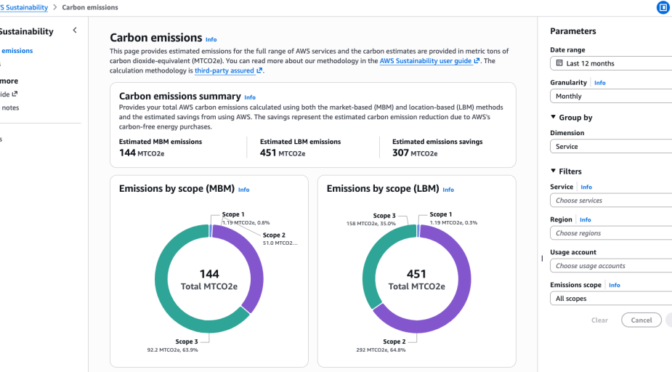
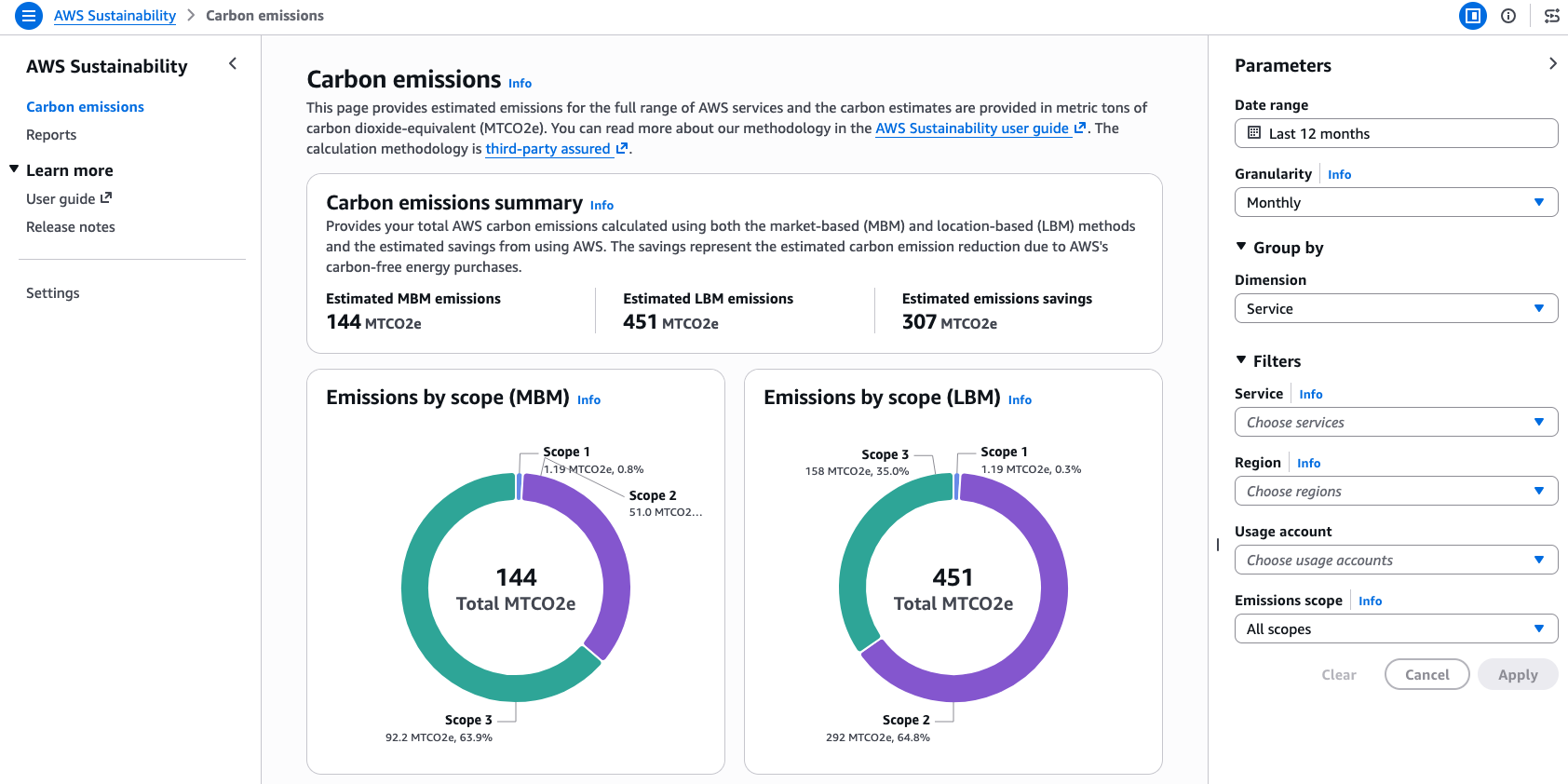
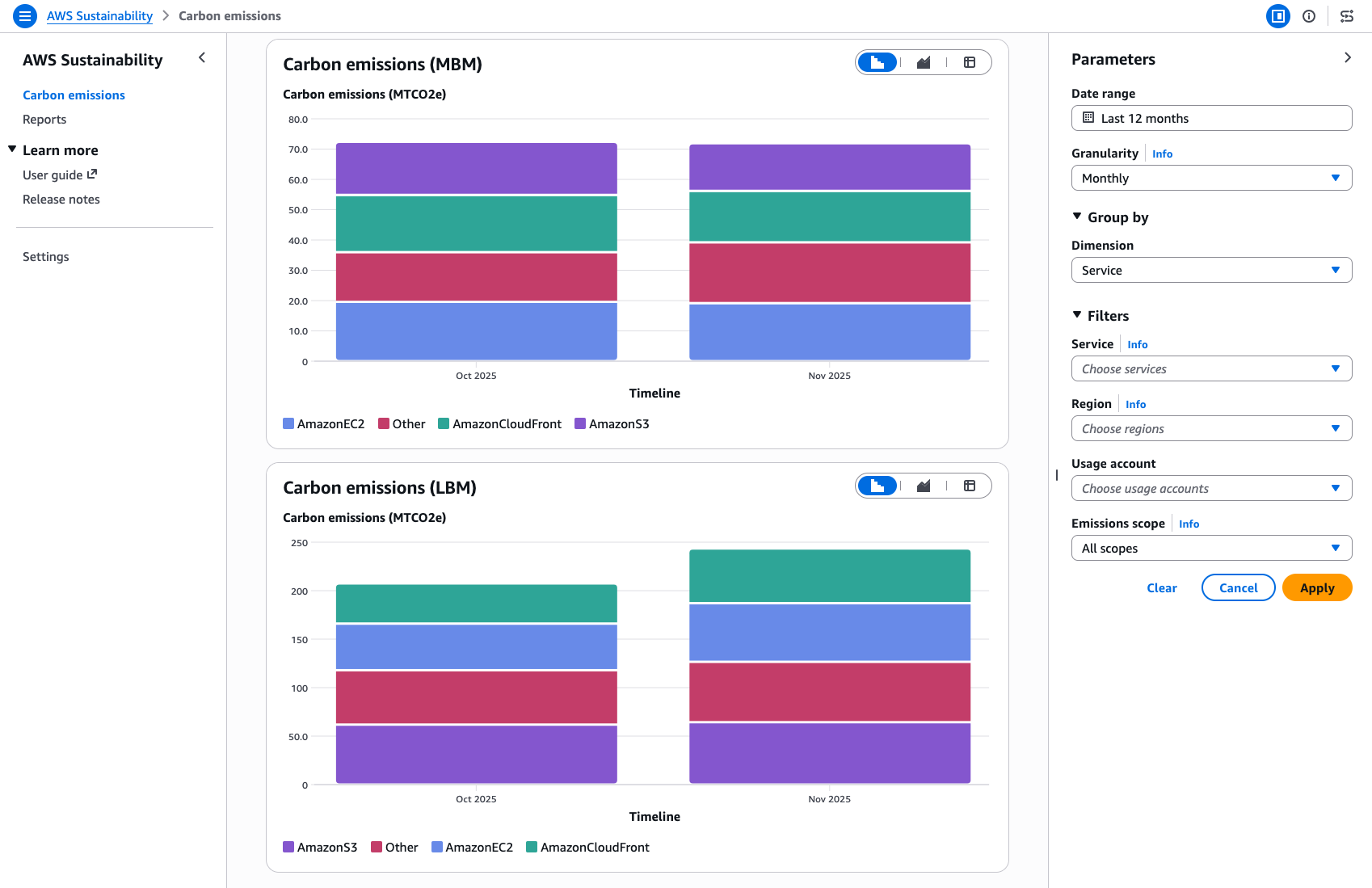
Customer Carbon Footprint Tool now includes Scope 3 emissions data — Understanding the full environmental impact of your cloud usage just got more comprehensive. The AWS Customer Carbon Footprint Tool (CCFT) now covers all three industry-standard emission scopes as defined by the Greenhouse Gas Protocol. This update adds Scope 3 emissions—covering the lifecycle carbon impact from manufacturing servers, powering AWS facilities, and transporting equipment to data centers—plus Scope 1 natural gas and refrigerants. With historical data available back to January 2022, you can track your progress over time and make informed decisions about your cloud strategy to meet sustainability goals. Access the data through the CCFT dashboard or AWS Billing and Cost Management Data Exports.

Additional updates

I thought these projects, blog posts, and news items were also interesting:

AWS Secret-West Region is now available — AWS launched its second Secret Region in the western United States, capable of handling mission-critical workloads at the Secret U.S. security classification level. This new region provides enhanced performance for latency-sensitive workloads and offers multi-region resiliency with geographic separation for Intelligence Community and Department of Defense missions. The infrastructure features data centers and network architecture designed, built, accredited, and operated for security compliance with Intelligence Community Directive requirements.

Amazon CloudWatch now generates incident reports — CloudWatch investigations can now automatically generate comprehensive incident reports that include executive summaries, timeline of events, impact assessments, and actionable recommendations. The feature collects and correlates telemetry data along with investigation actions to help teams identify patterns and implement preventive measures through structured post-incident analysis.

Amazon Connect introduces threaded email views — Amazon Connect email now displays exchanges in a threaded format and automatically includes prior conversation context when agents compose responses. These enhancements make it easier for both agents and customers to maintain context and continuity across interactions, delivering a more natural and familiar email experience.

Amazon EC2 I8g instances expand to additional regions — Storage Optimized I8g instances are now available in Europe (London), Asia Pacific (Singapore), and Asia Pacific (Tokyo). Powered by AWS Graviton4 processors and third-generation AWS Nitro SSDs, these instances deliver up to 60% better compute performance and 65% better real-time storage performance per TB compared to previous generation I4g instances, with storage I/O latency reduced by up to 50%.

AWS Location Service adds enhanced map styling — Developers can now incorporate terrain visualization, contour lines, real-time traffic overlays, and transportation-specific routing details through the GetStyleDescriptor API. The new styling parameters enable tailored maps for specific applications—from outdoor navigation to logistics planning.

CloudWatch Synthetics introduces multi-check canaries — You can now bundle up to 10 different monitoring steps in a single canary using JSON configuration without custom scripts. The multi-check blueprints support HTTP endpoints with authentication, DNS validation, SSL certificate monitoring, and TCP port checks, making API monitoring more cost-effective.

Amazon S3 Tables now generates CloudTrail events — S3 Tables now logs AWS CloudTrail events for automatic maintenance operations, including compaction and snapshot expiration. This enables organizations to audit the maintenance activities that S3 Tables automatically performs to enhance query performance and reduce operational costs.

AWS Lambda increases asynchronous invocation payload size to 1 MB — Lambda has quadrupled the maximum payload size for asynchronous invocations from 256 KB to 1 MB across all AWS Commercial and GovCloud (US) Regions. This expansion streamlines architectures by allowing comprehensive data to be included in a single event, eliminating the need for complex data chunking or external storage solutions. Use cases now better supported include large language model prompts, detailed telemetry signals, complex ML output structures, and complete user profiles. The update applies to asynchronous invocations through the Lambda API or push-based events from services like S3, CloudWatch, SNS, EventBridge, and Step Functions. Pricing remains at 1 request charge for the first 256 KB, with 1 additional charge per 64 KB chunk thereafter.

Upcoming AWS events

Keep a look out and be sure to sign up for these upcoming events:

AWS re:Invent 2025 (December 1-5, 2025, Las Vegas) — AWS flagship annual conference offering collaborative innovation through peer-to-peer learning, expert-led discussions, and invaluable networking opportunities. Registration is now open.

Join the AWS Builder Center to learn, build, and connect with builders in the AWS community. Browse for upcoming in-person and virtual developer-focused events in your area.

That’s all for this week. Check back next Monday for another Weekly Roundup!

~ micah