When I am thinking about the security of manufacturing environments, I am usually focusing on IoT devices integrated into production lines. All the little sensors and actuators are often very difficult to secure. On the other hand, there is also "big software" that is used to manage manufacturing. One example is DELMIA Apriso by Dassault Systèmes. This type of Manufacturing Operation Management (MOM) or Manufacturing Execution System (MES) ties everything together and promises to connect factory floors to ERP systems.
A quick look at sextortion at scale: 1,900 messages and 205 Bitcoin addresses spanning four years, (Tue, Sep 2nd)
Now Open — AWS Asia Pacific (New Zealand) Region
Kia ora! Today, I’m pleased to share the general availability of the AWS Asia Pacific (New Zealand) Region with three Availability Zones and API name ap-southeast-6. With the new Region, customers can now run workloads and securely store data in New Zealand while serving end users with even lower latency.

The new AWS Asia Pacific (New Zealand) Region will help organizations run their applications and serve end users while maintaining data residency in New Zealand. The NZD $7.5 billion Amazon Web Services (AWS) investment to establish an AWS Region in New Zealand is expected to contribute NZD $10.8 billion to New Zealand’s gross domestic product (GDP) which is estimated to create 1,000 new jobs annually and will enable Kiwi organizations of all sizes to innovate and scale faster using the most secure and resilient infrastructure.
AWS in New Zealand
Since we opened our first office in New Zealand in 2013, we’ve been continuously expanding our infrastructure to better serve Kiwi customers:
Connectivity to the global AWS network – In 2016, AWS enhanced New Zealand’s connectivity to the AWS Global Infrastructure by establishing diverse, high-capacity subsea cable connections, improving network reliability and performance for customers.
Amazon CloudFront – In 2020, AWS expanded its infrastructure footprint in New Zealand by adding two Amazon CloudFront edge locations in Auckland.
AWS Local Zones – To further enhance its infrastructure offerings in New Zealand, AWS introduced an AWS Local Zone in Auckland in 2023 helping customers deliver applications that require single-digit millisecond latency.
AWS Direct Connect – In the same year, AWS also added a Direct Connect location in Auckland to help customers securely link their on-premises networks to AWS resulting in lower networking costs and improved application performance. With this Region launch, AWS is adding another Direct Connect location in Auckland.
Let’s take a look at how AWS customers are leveraging AWS capabilities for diverse needs.
Security and compliance
The New Zealand government has a cloud first policy to encourage cloud adoption across the public sector. AWS supports 143 security standards and compliance certifications, including Payment Card Industry Data Security Standard (PCI DSS), Health Insurance Portability and Accountability Act (HIPAA) and Health Information Technology for Economic and Clinical Health (HITECH), Federal Risk and Authorization Management Program (FedRAMP), General Data Protection Regulation (GDPR), Federal Information Processing Standard (FIPS) 140-3, and National Institute of Standards and Technology (NIST) 800-171, helping customers satisfy compliance requirements around the globe and providing a secure cloud infrastructure.
MATTR, a New Zealand-based organization providing infrastructure and digital trust services to businesses and governments, sees significant benefits from the new Region. To learn more about how MATTR and other organizations like Kiwibank and Deloitte plan to use the AWS New Zealand Region, visit this news article.
Accelerating AI innovation in New Zealand
AWS delivers the most comprehensive set of capabilities for generative AI at every layer of the stack, including a choice of cutting-edge large language models (LLMs) for implementing generative AI with Amazon Bedrock, and the most capable generative AI assistant to transform how work gets done with Amazon Q.
New Zealand customers are already benefiting from the generative AI capabilities offered by AWS.
Thematic is a New Zealand-based global leader in customer intelligence and feedback analysis. Thematic uses generative AI to turn customer feedback data from multiple channels into curated, accurate, and reliable customer intelligence.
“Using Amazon Bedrock is just so incredibly easy that it just makes sense. Whenever we design a solution, we do test more than 10 large language models (LLMs). Consistently the ones offered by AWS are winning those competitions,” said Nathan Holmberg, CTO and Co-Founder, Thematic.
To learn more on other customers like One NZ utilized generative AI, visit this article.
Building cloud skills together
Since signing a memorandum of understanding (MoU) with the New Zealand government in 2022, Amazon has trained more than 50,000 Kiwis toward our goal of 100,000. Amazon is committed to continuing to invest in cloud education through programs including AWS Academy, AWS Skills Builder, AWS Educate, and AWS re/Start. Organizations are using AWS to scale globally while investing in local talent development, supporting New Zealand’s growing demand for cloud expertise.
Xero, a global small business platform helps customers supercharge their business by bringing together the most important small business tools, including accounting, payroll and payments — on one platform. Leveraging AWS since 2016, Xero has scaled its platform globally, enhancing its features and enabling continual innovation.
“Amazon’s commitment to the New Zealand tech industry through their NZD $7.5B investment is promising. It’s a significant vote of confidence that will help connect New Zealand tech exporters with new global opportunities across the AWS ecosystem and the broader Amazon network,” says Bridget Snelling, Xero Country Manager, Aotearoa New Zealand.
Sustainable digital transformation
Through The Climate Pledge, Amazon is committed to reaching net-zero carbon across its business by 2040. AWS is committed to supporting New Zealand’s sustainability goals with efficient and responsible operations of its data centers in the country. The AWS Asia Pacific (New Zealand) Region is underpinned by renewable energy from day one through its agreement with Mercury New Zealand.
Energy companies are using AWS to modernize operations while advancing sustainability goals. Sharesies, a wealth development platform, is using AWS to modernize operations while advancing sustainability goals.
“Sharesies is very supportive of storing customer data in-country and being able to use renewable energy, “ says Sharesies Chief Technical Officer Richard Clark. “To do this in New Zealand on the AWS Cloud and have it fully powered by Mercury’s wind energy is a huge step forward. And very exciting!”
AWS partners in New Zealand
The AWS Partner Network (APN) in New Zealand includes a growing ecosystem of consulting and technology partners helping customers of all sizes design, architect, build, migrate, and manage their workloads on AWS. AWS Partners like Custom D, Grant Thornton Digital, MongoDB, and Parallo are actively supporting customers to deliver innovative solutions tailored to the unique needs of New Zealand organizations across various industries. With the new Region, these partners can now leverage the full capabilities of AWS cloud services locally.
AWS community in New Zealand
New Zealand is also home to one AWS Hero, 26 AWS Community Builders, 6 AWS User Groups and almost 9,000 community members across AWS User Groups in Auckland, Wellington, and Christchurch. If you’re interested in joining AWS User Groups New Zealand, visit their Meetup and social media pages.
Here’s what our AWS Hero Arshad Zackeriya, says about the new Region:
“The launch of the AWS Region in New Zealand is a game-changer for our country. It’s not just about a new set of data centers; it’s about unlocking the potential of New Zealand’s businesses and developer communities, allowing us to build a better, more connected Aotearoa for all.”
Available now
The AWS Asia Pacific (New Zealand) Region is the first infrastructure Region in New Zealand and sixteenth Region in Asia Pacific. With this launch, AWS now spans 120 Availability Zones within 38 geographic Regions around the world, with announced plans for 10 more Availability Zones and three more AWS Regions in the Kingdom of Saudi Arabia, Chile, and the European Sovereign Cloud.
The new Asia Pacific (New Zealand) Region is ready to support your business, and you can find a detailed list of the services available in this Region on the AWS Services by Region page. To learn more, visit the AWS Global Infrastructure page, and start building on ap-southeast-6!
Happy building!
— Donnie

AWS Weekly Roundup: Amazon EC2, Amazon Q Developer, IPv6 updates, and more (September 1, 2025)
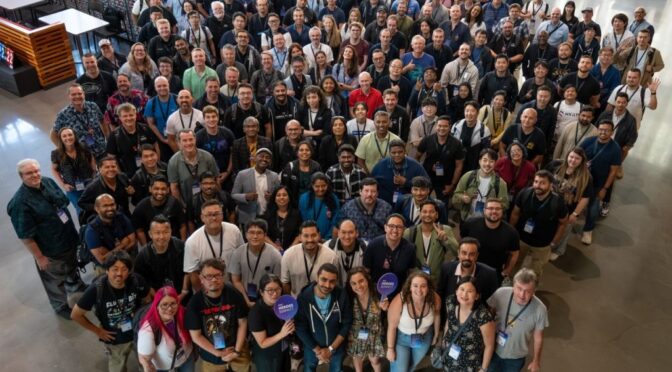
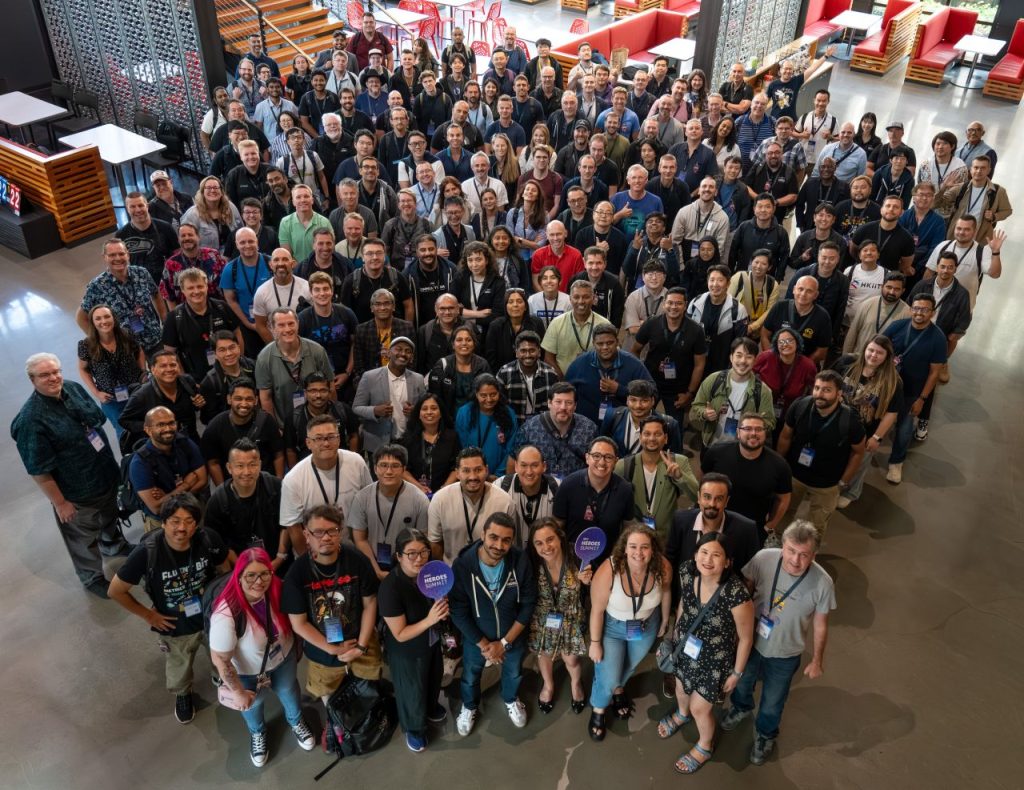
My LinkedIn feed was absolutely packed this week with pictures from the AWS Heroes Summit event in Seattle. It was heartwarming to see so many familiar faces and new Heroes coming together.

For those not familiar with the AWS Heroes program, it’s a global community recognition initiative that honors individuals who make outstanding contributions to the AWS community. These Heroes share their deep AWS knowledge through content creation, speaking at events, organizing community gatherings, and contributing to open-source projects.
The AWS Heroes Summit brings these exceptional community leaders together, providing a unique platform for knowledge exchange, networking, and collaboration. As someone who regularly interacts with Heroes through our AWS initiatives, I always find these summits invaluable – they offer deep technical discussions, early access to AWS roadmaps, and opportunities to provide direct feedback to AWS service teams. The insights and connections made at these events often translate into better resources and guidance for the broader AWS community.
Last week’s launches
In addition to this inspiring community, here are some AWS launches that caught my attention:
- AWS expands Internet Protocol v6 (IPv6) support to AWS App Runner, AWS Client VPN, and RDS Data API — Three more AWS services now support IPv6 connectivity, helping you meet compliance requirements and removes the need for handling address translation between IPv4 and IPv6. AWS App Runner now supports IPv6-based inbound and outbound traffic on both public and private App Runner service endpoints. AWS Client VPN announced support for remote access to IPv6 workloads, allowing you to establish secure VPN connections to your IPv6-enabled VPC resources. Finally, RDS Data API now supports IPv6, enabling dual-stack configuration (IPv4 and IPv6) connectivity for your Aurora databases.
- We launched two new instance families this week: the new storage-optimized I8ge and the general-purpose M8i instances —Our I8ge instances, powered by AWS Graviton4 processors, deliver up to 60% better compute performance compared to their Graviton2-based predecessors. These instances feature third-generation AWS Nitro SSDs, providing up to 55% better real-time storage performance per TB and significantly lower I/O latency. With 120 TB of storage and sizes up to 48xlarge (including two metal options), they offer the highest storage density among AWS Graviton-based storage optimized instances. We also launched M8i and M8i-flex instances with custom Intel Xeon 6 processors. These instances deliver up to 15% better price-performance and 2.5x more memory bandwidth than their predecessors. M8i-flex instances are ideal for general-purpose workloads, available from large to 16xlarge. For demanding applications, you can choose from our SAP-certified M8i instances in 13 sizes, including 2 bare metal options and a new 96xlarge size.
- Amazon EC2 Mac Dedicated hosts now support Host Recovery and Reboot-based host maintenance — you can enable two new capabilities for your EC2 Mac Dedicated Hosts: Host Recovery and Reboot-based Host Maintenance. Host Recovery automatically detects potential hardware issues on Mac Dedicated Hosts and seamlessly migrates Mac instances to a new replacement host, minimizing disruption to workloads. Reboot-based Host Maintenance automatically stops and restarts instances on replacement hosts when scheduled maintenance events occur, eliminating the need for manual intervention during planned maintenance windows.
- Amazon Q Developer now supports MCP admin control — Administrators have now the ability to enable or disable the MCP functionality for all the Q Developer clients in their organization. When an administrator disables the functionality, users will not be allowed to add any MCP servers, nor will any previously defined servers be initialized.
Other AWS news
Here are some additional projects and blog posts that you might find interesting:
- Mastering Amazon Q Developer with Rules — I read an interesting article about Amazon Q Developer’s rules feature this weekend that I want to share with you. What caught my attention is how it solves a pain point I often encounter when working with AI assistants – having to repeatedly explain my coding preferences and standards. With rules, you define your preferences once in Markdown files, and Amazon Q Developer automatically follows them for every interaction. I particularly like how transparent the system is, showing which rules it’s following, and how it helps maintain consistency across teams. Since implementing rules in my projects, I’ve seen more consistent code quality, all while reducing the cognitive load of having to repeatedly explain our standards.
- Strategies for excelling across all four exam domains of the AWS Certified Machine Learning – Specialty certification. The AWS Training & Certification team, where I spent my first three years at AWS, shared how to prepare for the AWS Certified Machine Learning – Specialty certification, whether you’re starting from scratch or building upon existing AWS Certifications. They share the prerequisites and guidance to help you get ready for this certification and demonstrate your expertise in building ML solutions with AWS.
- As is now our tradition after Prime Day, we shared the impressive metrics showing how AWS services scaled to support one of the world’s largest shopping events. Amazon Prime Day 2025 was the biggest ever, setting records for both sales volume and total items sold during the 4-day event. This year was particularly special as we saw a significant transformation in the Prime Day experience through advancements in our generative AI offerings, with customers using Alexa+, Rufus, and AI Shopping Guides to discover deals and get product information. The numbers are staggering – Amazon DynamoDB handled tens of trillions of API calls while maintaining high availability, delivering single-digit millisecond responses and peaking at 151 million requests per second. Amazon API Gateway processed over 1 trillion internal service requests—a 30 percent increase in requests on average per day compared to Prime Day 2024.
Upcoming AWS events
Check your calendars and sign up for these upcoming AWS events:
- AWS Summits — Join free online and in-person events that bring the cloud computing community together to connect, collaborate, and learn about AWS. Register in your nearest city: Toronto (September 4), Los Angeles (September 17), and Bogotá (October 9).
- AWS re:Invent 2025 — This flagship annual conference is coming to Las Vegas from December 1–5. The event catalog is now available. Mark your calendars for this not to be missed gathering of the AWS community.
- AWS Community Days — Join community-led conferences that feature technical discussions, workshops, and hands-on labs led by expert AWS users and industry leaders from around the world: Adria (September 5), Baltic (September 10), Aotearoa (September 18), South Africa (September 20), Bolivia (September 20), Portugal (September 27).
Join the AWS Builder Center to learn, build, and connect with builders in the AWS community. Browse here for upcoming in-person and virtual developer-focused events.
That’s all for this week. Check back next Monday for another Weekly Roundup!
New general-purpose Amazon EC2 M8i and M8i Flex instances are now available
Today, we’re announcing the general availability of Amazon Elastic Compute Cloud (Amazon EC2) general-purpose M8i and M8i-Flex instances powered by custom Intel Xeon 6 processors available only on AWS with sustained all-core 3.9 GHz turbo frequency. These instances deliver the highest performance and fastest memory bandwidth among comparable Intel processors in the cloud. They also deliver up to 15 percent better price performance, up to 20 percent higher performance, and 2.5 times more memory bandwidth compared to previous generation M7i and M7i-Flex instances.
M8i and M8i-flex instances are ideal for running general purpose workloads such as general web application servers, virtual desktops, batch processing, microservices, databases, and enterprise applications. In terms of performance, these instances are specifically up to 60 percent faster for NGINX web applications, up to 30 percent faster for PostgreSQL database workloads, and up to 40 percent faster for AI deep learning recommendation models compared to M7i and M7i-Flex instances.
As like R8i and R8i-Flex instances, these instances use the new sixth generation AWS Nitro Cards, delivering up to two times more network and Amazon Elastic Block Storage (Amazon EBS) bandwidth compared to the previous generation instances. It greatly improves network throughput for workloads handling small packets such as web, application, and gaming servers. They also support bandwidth configuration with 25 percent allocation adjustments between network and Amazon EBS bandwidth, enabling better database performance, query processing, and logging speeds.
M8i instances
M8i instances provide up to 384 vCPUs and 1.5 TB memory including bare metal instances that provide dedicated access to the underlying physical hardware. These SAP-certified instances help you to run large application servers and databases, gaming servers, CPU-based inference, and video streaming that need the largest instance sizes or high CPU continuously.
Here are the specs for M8i instances:
| Instance size | vCPUs | Memory (GiB) | Network bandwidth (Gbps) | EBS bandwidth (Gbps) |
| m8i.large | 2 | 8 | Up to 12.5 | Up to 10 |
| m8i.xlarge | 4 | 16 | Up to 12.5 | Up to 10 |
| m8i.2xlarge | 8 | 32 | Up to 15 | Up to 10 |
| m8i.4xlarge | 16 | 64 | Up to 15 | Up to 10 |
| m8i.8xlarge | 32 | 128 | 15 | 10 |
| m8i.12xlarge | 48 | 192 | 22.5 | 15 |
| m8i.16xlarge | 64 | 256 | 30 | 20 |
| m8i.24xlarge | 96 | 384 | 40 | 30 |
| m8i.32xlarge | 128 | 512 | 50 | 40 |
| m8i.48xlarge | 192 | 768 | 75 | 60 |
| m8i.96xlarge | 384 | 1536 | 100 | 80 |
| m8i.metal-48xl | 192 | 768 | 75 | 60 |
| m8i.metal-96xl | 384 | 1536 | 100 | 80 |
M8i-Flex instances
M8i-Flex instances are a lower-cost variant of the M8i instances, with 5 percent better price performance at 5 percent lower prices. They’re designed for workloads that benefit from the latest generation performance but don’t fully utilize all compute resources. These instances can reach up to the full CPU performance 95 percent of the time.
Here are the specs for the M8i-Flex instances:
| Instance size | vCPUs | Memory (GiB) | Network bandwidth (Gbps) | EBS bandwidth (Gbps) |
| m8i-flex.large | 2 | 8 | Up to 12.5 | Up to 10 |
| m8i-flex.xlarge | 4 | 16 | Up to 12.5 | Up to 10 |
| m8i-flex.2xlarge | 8 | 32 | Up to 15 | Up to 10 |
| m8i-flex.4xlarge | 16 | 64 | Up to 15 | Up to 10 |
| m8i-flex.8xlarge | 32 | 128 | Up to 15 | Up to 10 |
| m8i-flex.12xlarge | 48 | 192 | Up to 22.5 | Up to 15 |
| m8i-flex.16xlarge | 64 | 256 | Up to 30 | Up to 20 |
If you’re currently using earlier generations of general-purpose instances, you can adopt M8i-Flex instances without having to make changes to your application or your workload.
Now available
Amazon EC2 M8i and M8i-Flex instances are available today in the US East (N. Virginia), US East (Ohio), US West (Oregon), and Europe (Spain) AWS Regions. M8i and M8i-Flex instances can be purchased as On-Demand, Savings Plan, and Spot instances. M8i instances are also available in Dedicated Instances and Dedicated Hosts. To learn more, visit the Amazon EC2 Pricing page.
Give M8i and M8i-Flex instances a try in the Amazon EC2 console. To learn more, visit the Amazon EC2 M8i instances page and send feedback to AWS re:Post for EC2 or through your usual AWS Support contacts.
— Channy
Increasing Searches for ZIP Files, (Thu, Aug 28th)
Getting a Better Handle on International Domain Names and Punycode, (Tue, Aug 26th)
International domain names (IDN) continue to be an interesting topic. For the most part, they are probably less of an issue than some people make them out to be, given that popular browsers like Google Chrome are pretty selective in displaying them. But on the other hand, they are still used legitimately or not, and keeping a handle on them is interesting.
AWS services scale to new heights for Prime Day 2025: key metrics and milestones
Amazon Prime Day 2025 was the biggest Amazon Prime Day shopping event ever, setting records for both sales volume and total items sold during the 4-day event. Prime members saved billions while shopping Amazon’s millions of deals during the event.
This year marked a significant transformation in the Prime Day experience through advancements in the generative AI offerings from Amazon and AWS. Customers used Alexa+—the Amazon next-generation personal assistant now available in early access to millions of customers—along with the AI-powered shopping assistant, Rufus, and AI Shopping Guides. These features, built on more than 15 years of cloud innovation and machine learning expertise from AWS, combined with deep retail and consumer experience from Amazon, helped customers quickly discover deals and get product information, complementing the fast, free delivery that Prime members enjoy year-round.
As part of our annual tradition to tell you about how AWS powered Prime Day for record-breaking sales, I want to share the services and chart-topping metrics from AWS that made your amazing shopping experience possible.

Prime Day 2025 – all the numbers
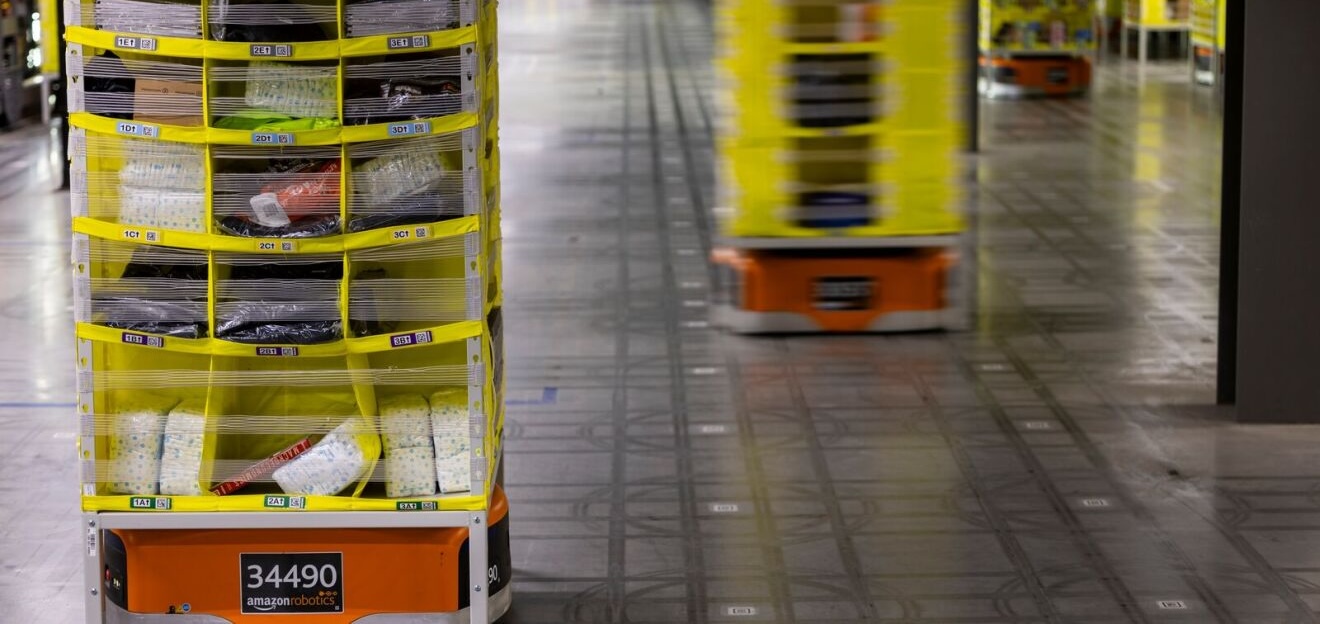
During the weeks leading up to big shopping events like Prime Day, Amazon fulfillment centers and delivery stations work to get ready and ensure operations run efficiently and safely. For example, the Amazon automated storage and retrieval system (ASRS) operates a global fleet of industrial mobile robots that move goods around Amazon fulfillment centers.
AWS Outposts, a fully managed service that extends the AWS experience on-premises, powers software applications that manage the command-and-control of Amazon ASRS and supports same-day and next-day deliveries through low-latency processing of critical robotic commands.
During Prime Day 2025, AWS Outposts at one of the largest Amazon fulfillment centers sent more than 524 million commands to over 7,000 robots, reaching peak volumes of 8 million commands per hour—a 160 percent increase compared to Prime Day 2024.

Here are some more interesting, mind-blowing metrics:
- Amazon Elastic Compute Cloud (Amazon EC2) – During Prime Day 2025, AWS Graviton, a family of processors designed to deliver the best price performance for cloud workloads running in Amazon EC2, powered more than 40 percent of the Amazon EC2 compute used by Amazon.com. Amazon also deployed over 87,000 AWS Inferentia and AWS Trainium chips – custom silicon chips for deep learning and generative AI training and inference – to power Amazon Rufus for Prime Day.
- Amazon SageMaker AI — Amazon SageMaker AI, a fully managed service that brings together a broad set of tools to enable high-performance, low-cost machine learning (ML), processed more than 626 billion inference requests during Prime Day 2025.
- Amazon Elastic Container Service (Amazon ECS) and AWS Fargate– Amazon Elastic Container Service (Amazon ECS) is a fully managed container orchestration service that works seamlessly with AWS Fargate, a serverless compute engine for containers. During Prime Day 2025, Amazon ECS launched an average of 18.4 million tasks per day on AWS Fargate, representing a 77 percent increase from the previous year’s Prime Day average.
- AWS Fault Injection Service (AWS FIS) – We ran over 6,800 AWS FIS experiments—over eight times more than we conducted in 2024—to test resilience and ensure Amazon.com remains highly available on Prime Day. This significant increase was made possible by two improvements: new Amazon ECS support for network fault injection experiments on AWS Fargate, and the integration of FIS testing in continuous integration and continuous delivery (CI/CD) pipelines.
- AWS Lambda – AWS Lambda, a serverless compute service that lets you run code without managing infrastructure, handled over 1.7 trillion invocations per day during Prime Day 2025.
- Amazon API Gateway – During Prime Day 2025, Amazon API Gateway, a fully managed service that makes it easy to create, maintain, and secure APIs at any scale, processed over 1 trillion internal service requests—a 30 percent increase in requests on average per day compared to Prime Day 2024.
- Amazon CloudFront – Amazon CloudFront, a content delivery network (CDN) service that securely delivers content with low latency and high transfer speeds, delivered over 3 trillion HTTP requests during the global week of Prime Day 2025, a 43 percent increase in requests compared to Prime Day 2024.
- Amazon Elastic Block Store (Amazon EBS) – During Prime Day 2025, Amazon EBS, our high-performance block storage service, peaked at 20.3 trillion I/O operations, moving up to an exabyte of data daily.
- Amazon Aurora – On Prime Day, Amazon Aurora, a relational database management system (RDBMS) built for high performance and availability at global scale for PostgreSQL, MySQL, and DSQL, processed 500 billion transactions, stored 4,071 terabytes of data, and transferred 999 terabytes of data.
- Amazon DynamoDB – Amazon DynamoDB, a serverless, fully managed, distributed NoSQL database, powers multiple high-traffic Amazon properties and systems including Alexa, the Amazon.com sites, and all Amazon fulfillment centers. Over the course of Prime Day, these sources made tens of trillions of calls to the DynamoDB API. DynamoDB maintained high availability while delivering single-digit millisecond responses and peaking at 151 million requests per second.
- Amazon ElastiCache – During Prime Day, Amazon ElastiCache, a fully managed caching service delivering microsecond latency, peaked at serving over 1.5 quadrillion daily requests and over 1.4 trillion requests in a minute.
- Amazon Kinesis Data Streams – Amazon Kinesis Data Streams, a fully managed serverless data streaming service, processed a peak of 807 million records per second during Prime Day 2025.
- Amazon Simple Queue Service (Amazon SQS) – During Prime Day 2025, Amazon SQS – a fully managed message queuing service for microservices, distributed systems, and serverless applications – set a new peak traffic record of 166 million messages per second.
- Amazon GuardDuty – During Prime Day 2025, Amazon GuardDuty, an intelligent threat detection service, monitored an average of 8.9 trillion log events per hour, a 48.9 percent increase from last year’s Prime Day.
- AWS CloudTrail – AWS CloudTrail, which tracks user activity and API usage on AWS, as well as in hybrid and multicloud environments, processed over 2.5 trillion events during Prime Day 2025, compared to 976 billion events in 2024.
Prepare to scale
If you’re preparing for similar business-critical events, product launches, and migrations, I recommend that you take advantage of our newly branded AWS Countdown (formerly known as AWS Infrastructure Event Management, or IEM). This comprehensive support program helps assess operational readiness, identify and mitigate risks, and plan capacity, using proven playbooks developed by AWS experts. We’ve expanded to include: generative AI implementation support to help you confidently launch and scale AI initiatives; migration and modernization support, including mainframe modernization; and infrastructure optimization for specialized sectors including election systems, retail operations, healthcare services, and sports and gaming events.
I look forward to seeing what other records will be broken next year!
— Channy
AWS Weekly Roundup: Amazon Aurora 10th anniversary, Amazon EC2 R8 instances, Amazon Bedrock and more (August 25, 2025)
As I was preparing for this week’s roundup, I couldn’t help but reflect on how database technology has evolved over the past decade. It’s fascinating to see how architectural decisions made years ago continue to shape the way we build modern applications. This week brings a special milestone that perfectly captures this evolution in cloud database innovation as Amazon Aurora celebrated 10 years of database innovation.
Amazon Web Services (AWS) Vice President Swami Sivasubramanian reflected on LinkedIn about his journey with Amazon Aurora, calling it “one of the most interesting products” he’s worked on. When Aurora launched in 2015, it shifted the database landscape by separating compute and storage. Now trusted by hundreds of thousands of customers across industries, Aurora has grown from a MySQL-compatible database to a comprehensive platform featuring innovations such as Aurora DSQL, serverless capabilities, I/O-Optimized pricing, zero-ETL integrations, and generative AI support. Last week’s celebration on August 21 highlighted this decade-long transformation that continues to simplify database scaling for customers.
Last week’s launches
In addition to the inspiring celebrations, here are some AWS launches that caught my attention:
- AWS Billing and Cost Management introduces customizable Dashboards — This new feature consolidates cost data into visual dashboards with multiple widget types and visualization options, combining information from Cost Explorer, Savings Plans, and Reserved Instance reports to help organizations track spending patterns and share standardized cost reporting across accounts.
- Amazon Bedrock simplifies access to OpenAI open weight models — AWS has streamlined access to OpenAI’s open weight models (gpt-oss-120b and gpt-oss-20b), making them automatically available to all users without manual activation while maintaining administrator control through IAM policies and service control policies.
- Amazon Bedrock adds batch inference support for Claude Sonnet 4 and GPT-OSS models —This feature provides asynchronous processing of multiple inference requests with 50 percent lower pricing compared to on-demand inference, optimizing high-volume AI tasks such as document analysis, content generation, and data extraction with Amazon CloudWatch metrics for tracking batch workload progress
- AWS launching Amazon EC2 R8i and R8i-flex memory-optimized instances — Powered by custom Intel Xeon 6 processors, these new instances deliver up to 20 percent better performance and 2.5 times higher memory throughput than R7i instances, making them ideal for memory-intensive workloads like databases and big data analytics, with R8i-flex offering additional cost savings for applications that don’t fully utilize compute resources.
- Amazon S3 introduces batch data verification feature — A new capability in S3 Batch Operations that offers efficient verification of billions of objects using multiple checksum algorithms without downloading or restoring data, generating detailed integrity reports for compliance and audit purposes regardless of storage class or object size.
Other AWS news
Here are some additional projects and blog posts that you might find interesting:
- Amazon introduces DeepFleet foundation models for multirobot coordination — Trained on millions of hours of data from Amazon fulfillment and sortation centers, these pioneering models predict future traffic patterns for robot fleets, representing the first foundation models specifically designed for coordinating multiple robots in complex environments.
- Building Strands Agents with a few lines of code — A new blog demonstrates how to build multi-agent AI systems with a few lines of code, enabling specialized agents to collaborate seamlessly, handle complex workflows, and share information through standardized protocols for creating distributed AI systems beyond individual agent capabilities.
- AWS Security Incident Response introduces ITSM integrations — New integrations with Jira and ServiceNow provide bidirectional synchronization of security incidents, comments, and attachments, streamlining response while maintaining existing processes, with open source code available on GitHub for customization and extension to additional IT service management (ITSM) platforms.
- Finding root-causes using a network digital twin graph and agentic AI — A detailed blog post shows how AWS collaborated with NTT DOCOMO to build a network digital twin using graph databases and autonomous AI agents, helping telecom operators to move beyond correlation to identify true root causes of complex network issues, predict future problems, and improve overall service reliability.
Upcoming AWS events
Check your calendars and sign up for these upcoming AWS events:
- AWS Summits — Join free online and in-person events that bring the cloud computing community together to connect, collaborate, and learn about AWS. Register in your nearest city: Toronto (September 4), Los Angeles (September 17), and Bogotá (October 9).
- AWS re:Invent 2025 — This flagship annual conference is coming to Las Vegas from December 1–5. The event catalog is now available. Mark your calendars for this not to be missed gathering of the AWS community.
- AWS Community Days — Join community-led conferences that feature technical discussions, workshops, and hands-on labs led by expert AWS users and industry leaders from around the world: Adria (September 5), Baltic (September 10), Aotearoa (September 18), South Africa (September 20), Bolivia (September 20), Portugal (September 27).
Join the AWS Builder Center to learn, build, and connect with builders in the AWS community. Browse here for upcoming in-person and virtual developer-focused events.
That’s all for this week. Check back next Monday for another Weekly Roundup!
– Betty
Reading Location Position Value in Microsoft Word Documents, (Mon, Aug 25th)
While studying for the GX-FE [1], I started exploring the "Position" value in the registry that helps to tell Microsoft Word where you "left off". It's a feature many people that use Word have seen on numerous occasions and is explored in FOR500: Windows Forensic Analysis [2].